
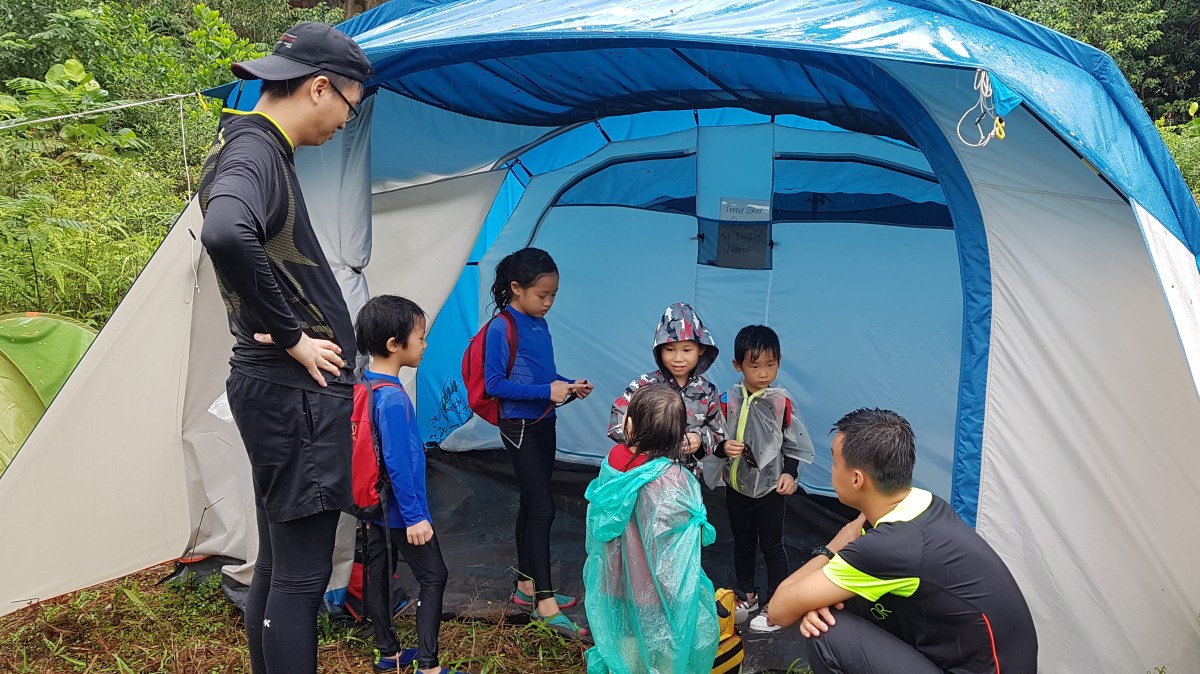
The dictionary defines a Safe Space as a place or environment where one feels confident, not exposed to judgement, emotional or physical harm. Well, that has a ring of truth. In our earthly reality, that would only be attainable by cancelling almost every possible mental dissent in our thoughts.
So then what constitutes a Safe Space? Why do we need it? How does it happen?
David Mcfall, a principal of a school in Quebec, shared at a Playful School Conference an insightful piece of wisdom that he found from the children at his school. He asked them, “What is a safe space?”. The collective wisdom attained from the children was that “A safe space is one where they do not feel alone“.
Children speak the deepest and simplest wisdom when we ask them sincerely. And when we reflect upon what is shared by these children, we will find that clarity of what a Safe Space truly means without the complex clouds of human politics.
A safe space to our children (and by extension everyone else), is simply a place where we find Solidarity and Support. It is a place where we feel connected with another human / animal / organism / space. A place where we do not feel alone.
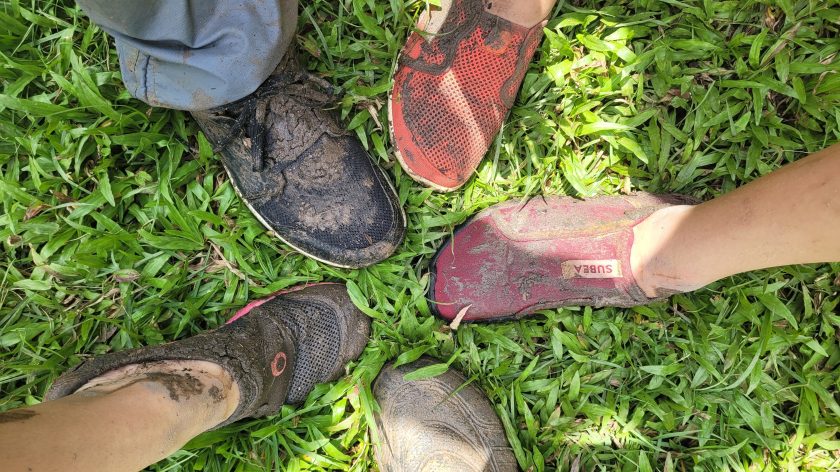
It is not necessarily a space without judgement or being offended. In reality, all of us are capable of causing these to OURSELVES even though others may not have meant to judge or offend us.
A Safe Space is an invitation to come together, and a place to exercise support for a fellow human.
We often use the words Safe Space without realising the meaning and deeper essence of it.
At the core of addressing the meaning of Safe Space, we also dive deep into the reality of Loneliness in children and adults in our current world. It is an often unacknowledged undercurrent of the pandemic. People feel lonely, but they may not have the language or ability to prioritise seeking support for their loneliness.
We can all feel alone even when we are in a big group / crowd of people. For loneliness is a deeply complex feeling that arises within all of us. ”’The physical presence of people and places that purport to be “Safe Space” does not make it less lonely for us.
”’ However, a simple, “I am with you” or “Would you like to join me” from another person, would have a potential to create a Safe Space. Have you ever experienced these moments in your life? How did you feel then? Did you feel more connected and less lonely at the moment?
***However, a simple, “I am with you” or “Would you like to join me” from another person, would quite promptly create a Safe Space. Have you ever experienced these moments in your life? How did you feel then? Did you feel more connected and less lonely at the moment?
Though we may not solve any problem immediately by being in Safe Spaces, the outlet that the safe space offers makes life more bearable at the toughest of times.
And that is the focus of what I would like to share with everyone here.The world that we live and interact in will always be laden with challenges, sword-crossings and a whole range of difficulties that are out of our control. The safe space that we discuss above would also not be absent of the loads. We do not need a safe space to be free of judgement. Just minimal support and invitation.
People need each other. Humans need each other.
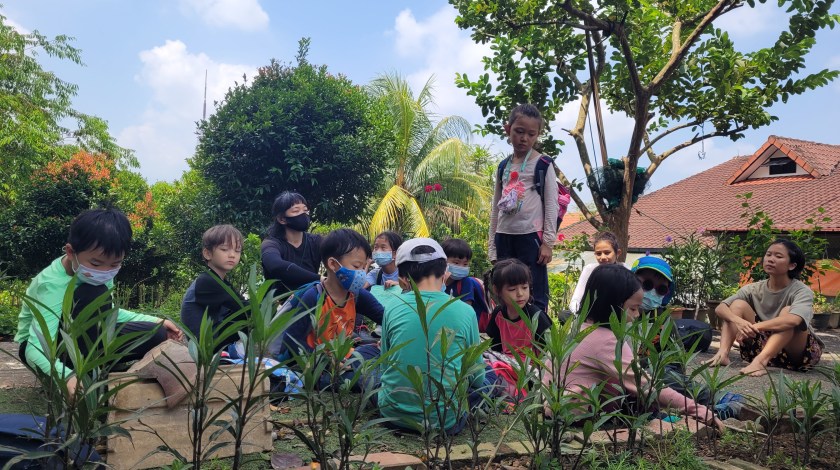
In a Forest School Weekly Senior class, the magic and exercise of the safe space happened in 2022 during a Group Forum discussion between the children and coaches, about aggressive behaviour.
After a few children who were the usual passive by-standers, stood up to share their opinion of support for their friend on the receiving end of aggressive behaviour, and disapproval for those who were more aggressive, the children on the receiving end, were able to voice out their opinion bravely. In speaking up, the bystanders created a safe space for those directly impacted by aggression to advocate for themselves. The Forum ended off with a sense of solidarity about each other’s feelings and opinions. Though no direct solution was made at the end, the solidarity changed the future interaction of the group in understanding and awareness.
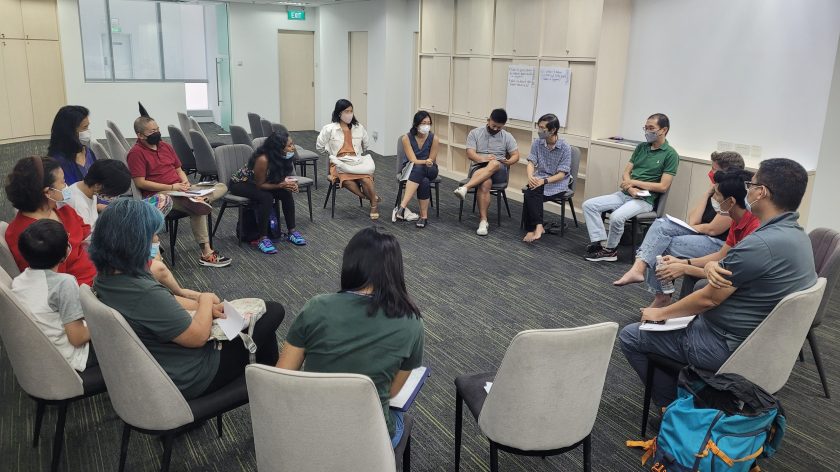
This is also evident in the following excerpt from an observation article on Summerhill
“William, who is from the local community, had an overnight ruined when he found “chucked up crisps” in his sleeping bag, “thousands of little bits.” He is hurt and mad. “Can we get lucky and someone owns up?” asks the chair. A series of denials follow. The boy explains further. “Someone went to the effort of buying crisps just to annoy me, and I want to give them shit for it.” The older kids offer sympathetic responses. One tells him that they had crisps for dinner and not to imagine someone had planned this out. Another supports his concern and complains about bullying and the way they have seen William treated. “This shows a lack of respect, and we ought to sort it out,” one comforter offers. But that doesn’t happen at this meeting. Still, the support William has gotten seems to mean something to him.”
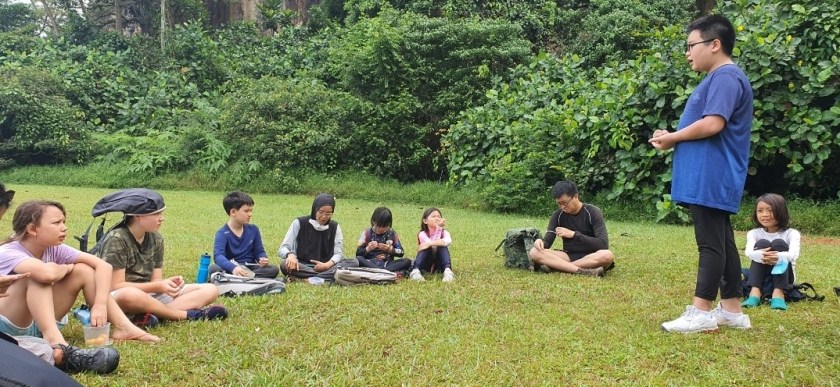
Both examples touch on the simple notion of children showing solidarity and support to their friends in a discursive setting instead of an instructive setting. We all know how the carrot-and-stick approach impacts bullying and behavioural issues in group settings…it always sends it underground, away from our eyes, into a darker psychological world.
The realisation of the meaning of Safe Space really closes the loop in my years of attempting to understand the issues our children and adults face in a group/community setting with regards to bullying etc.
So how can we create a safe space in our own life and for those around us?
First, start by paying attention to others in need. When we do realise another is in need, check in, send him/her a text or share with them the words, “I’m with you”. We can still remain detached with the individual, we need not be involved in solving their needs, but to witness and validate what they are going through is indeed a challenging situation. Because the effect lies in embodying Solidarity, not the result.
Next, invite others who are on their own. Sometimes, presence together is enough, even without doing the same activity. . Sometimes, a gesture of invitation is sufficient, even if the recipient does not accept the invitation. Because the effect lies in the opening the door, not in the person walking through it immediately.
I hope this piece gives everyone a moment to slow down and reflect about our loneliness, space and children. May you find inspiration or magic from it all.
Written by: Darren Quek
Editted by: Genevieve Ong
The following section (Critique from Editor) is an experimental component. I would like everyone to be able to witness the editorial perspective, while still retaining  the wild writing that is in tune with my heart and opinion. Genevieve perspective is much more balance and wholesome. Whereas my writing is much more skewered, as it arises during my own state of mind at the time of writing.
Enjoy 😉

- Darren Quek
Critique from Editor
”’The physical presence of people and places that purport to be “Safe Space” does not make it less lonely for us.
Genevieve Comment: As a reader, I would want to hear more from the writer about specific ways people experience disconnect even within a group. Illustrations help the reader identify the situations they’re in as “lonely” (offering validation to the reader, that yes, this situation is lonely, you’re not alone for thinking that!) and would be more impactful.
I think you could stand to have a few more paras showcasing how a child and adult might feel lonely. e.g. in the FSS context: a child might feel lonely when their best friend in a group graduates, when they’re not able to get peers on board to go where they want to go, when they’re the only new kid etc.
And possibly a separate para on adult loneliness, perhaps even segmenting into loneliness in social setting, loneliness on the work front etc. I think more illustrations would connect the two paragraphs [“we can all feel alone…” and “however, a simple…”] better.
I strongly recommend adding more examples because I found page 2 much clearer to understand than page 1.
***However, a simple, “I am with you” or “Would you like to join me” from another person, would immediately create a Safe Space
Genevieve Comment: I disagree with how this statement suggests these words would immediately / definitely create a safe space. There are those who use these words as platitudes, having picked up the lingo, but have no follow-through on holding safe space. Or worse, people with intentions to abuse, who know the scripts, and use these words to build false trust with the vulnerable. Suggestions: “has the potential to create a safe space”, or “would signal that the speaker might be a potential safe-space-holder”. An alternative would be to set more specific contexts for the efficacy of this statement, for e.g., a child is saying these words to another child, I would then believe the “immediacy”.
General Opinion on the Article point on Alone
Genevieve Comment: I think the meanings are key, if you’re contributing a piece to the discourse on loneliness and therefore why safe spaces are important, it might be more helpful to the reader if you stick with the accepted meanings of lonely vs. alone.
Lonely reflects more of a feeling state, or sadness or abandonment; whereas alone is more of a physical state of isolation or solitude. Since the article is really about loneliness, I feel you should stick with using “lonely” throughout rather than use “alone” and “lonely” interchangeably.
But it’s difficult because the original quote from Mcfall uses “alone” to begin with.
This is just my personal pov, and why it took me awhile to fully connect with this piece. I usually feel more onboard with your articles at a pretty fast pace. Perhaps round 2 will make things clearer for me…
This piece is written with an angle on how safe spaces are a tool to combat the loneliness epidemic in our modern world. There are many other angles and contexts in which one would subjectively deem a space / space-holders “safe”. As someone who grew up in Singapore in the 1990s, I only learnt of the term <holding space> as recently as 2017, and my definitions and perceived functions of “safe space” have constantly evolved. It is my hope that as more and more people become adept at holding safe and nurturing spaces, the necessity for sharing about what a safe space is will fade away, and we can shift focus to the next steps, finding <brave space> to make the necessary shifts to improve situations.
 Library