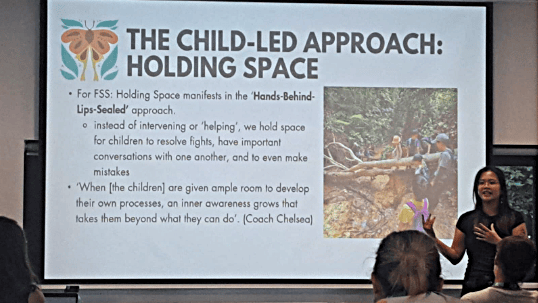
In June of 2024, Darren and I went to the Forest School Research Symposium in Liverpool UK, where I presented my research paper, ‘The Earth’s Spine’. I learnt a lot from the UK, not only from the symposium, but from simply showing up and being there in the country.
Within the short span of three days, I gained insight into a lot of perspectives regarding forest school as a global movement, special needs education, the value of recognising nature’s agency as we are connecting to a space, and so much more. WhileI have a laundry list of thoughts regarding the trip, allow me to me share a few preliminary thoughts
#1: Context is Key
From the process of writing my own research paper, I was already certain that context played an extremely important role in shaping how Forest School was practised across the world. By my definition, ‘context’ or ‘contextualising’ refers to adapting to the specific cultural practices, geographical landscapes, social structures, and material conditions that are unique to each location that Forest School is being practised in. It might seem obvious, but the truth is, ‘Forest School’ as we know it – in its institutionalised, certified and branded form – has been sometimes treated as an ideal ‘model’ from Europe to be replicated as is One can liken this to primary school teachers providing students with model answers to be memorised and used without any sort of discernment in an examination. Although using these model answers might be able to give you full marks, it often results in a lack of proper understanding and compromises our ability to think critically.
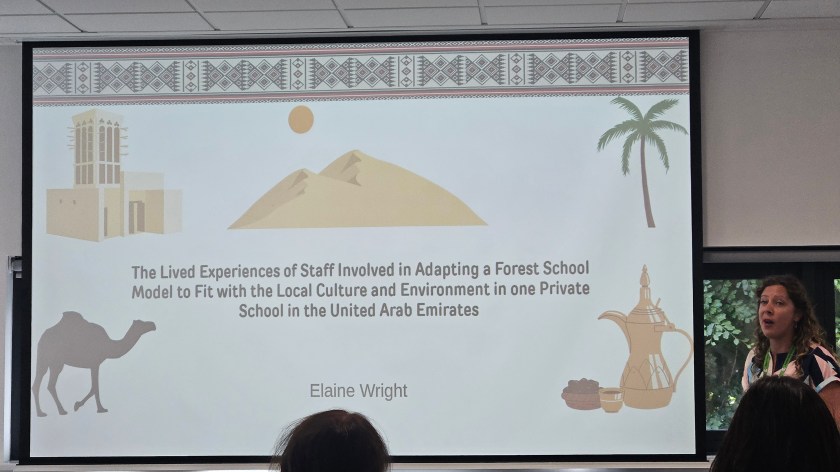
One of the presenters, Elaine Wright, who is from the UAE, shared about how some of the advertisements for Forest School in the UAE were quite laughable. For example, practitioners would use images of alpine forests, Wellington boots, and muddy puddles to promote Forest School programmes in the UAE; such imagery contradicts landscapes that are made up of largely deserts and cities.
(INSERT PICTURE)
In my opinion, forest schools should not be force-fitted into different countries, but instead, practitioners should always begin by finding their own connection to their own land and a language to express that special and unique connection. This connection cannot be one that is based on any notion of ‘Forest School’ that comes from an institution, an organisation, an association or even another person. It can borrow from these places,perhaps learn from them, or even adopt whole parts of other practices, but it can never be fully replicated from the original. Should one desire to start their own Forest School, or simply to begin practising or integrating Forest School ways into their daily life, they would have to embark on a deep, personal and (often)painful journey to understand and strengthen the connection between themselves and the universe, before they can even call themselves Forest School practitioners.
This is what differentiates Forest School from other educational frameworks that are often adopted, implemented and systemised commercially. Without the experience of a profound personal transformation, a Forest School practitioner would lack the deep, personal connection to the land and understanding of ‘context’ that lies at the heart of the Forest School philosophy.
#2: Should we even call ourselves ‘Forest School’?
This discussion on ‘context’ has also culminated as a question that I have held in my mind for quite a while, and lingered on despite not paying much mind to it. I had previously thought that I did not have any answers to it;merely some shadows of doubt, or even a hint of scepticism.
After my visit to the United Kingdom (UK), I think that I might have some shape of answer, or at least a response, to my own question. ‘Forest School’ is a term that we have taken from the UK, although it was not even invented there. We can trace the genealogy of the term toScandinavian region — primarily Sweden and Denmark, where the terms ‘skogsmulle’ (Swedish) or ‘skovbørnehaver’ (Danish) were pretty prevalent. Both of these terms mean something like ‘forest kindergarten’.
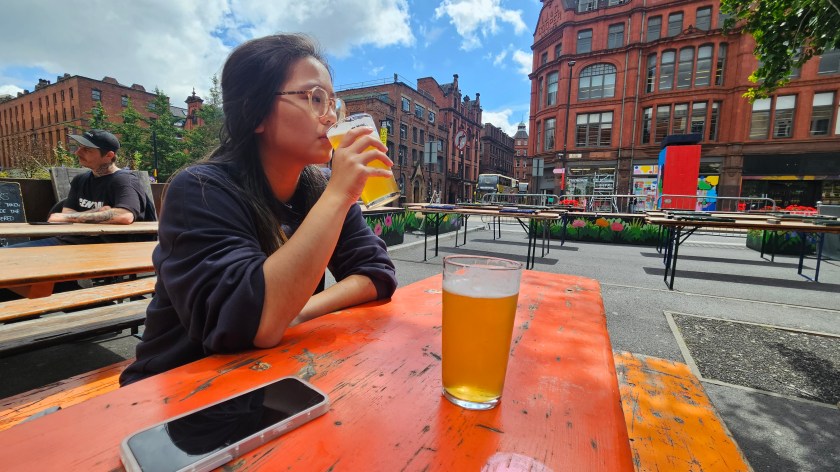
I started to really question the need to call ourselves ‘Forest School’ in Singapore (when thinking about ‘context’) when I noticed how the practitioners in the UK were organising themselves. In our conversations, I heard the words ‘certificate’, ‘practitioner’, ‘assessment’ and ‘funding’ even more than the amount of times that I drank beer in the UK. And that was to say, quite a considerable amount! One of the practitioners, upon hearing that we were from Singapore, immediately asked us if we were ‘Level Three’ trained, referring to the certification of Forest School that was to be examined and accredited by the Forest School Association (FSA) in the UK.
When I heard that question, I remember feeling quite taken aback. What do you mean “if I am ‘Level Three’ trained”? I was trained by Darren, the FS community, as well as the Forest herself! If anyone were to grant me permission to do Forest School, I would think that the Forest would be the one to give me permission, not an organisation that did not even belong to my own country. Maybe the certification matters in the UK, however, I do not think that this piece of paper from the UK is that much valuable to me, when I have learnt equally as much, or perhaps even more from my own personal journey in FSS, in the forests of Clementi, Alexandra, Rifle Range, Dairy Farm and many more (even the forests in my own soul).
So why are we still calling ourselves Forest School if this FS is a version of FS that is not even grounded in our local contexts and culture? To me, this version also seems to perpetuate colonisation to a certain extent— where people from the United Kingdom or Europe come to other countries such as Singapore or perhaps Malaysia to ‘share’ or ‘certify’ FS, and in doing so, this makes the United Kingdom the only country that FS should be based upon, and that is able to certify and validate FS practitioners.
The truth is, if you are deep in the practice, you will realise that people have been doing forest school way way way before it was even called Forest School. I know that people like to talk about the indigenous peoples, but it is true that much of their ways currently resemble what we now call ‘Forest School’ — a way of life that is based on a connection to nature and following the rhythm and flows of our own lives. We have already been doing Forest School! We have been doing it before the British, or the Scandinavians, or anyone else who wants to claim and certify the practice under their terms and conditions have been doing it. How can you stake a claim to it, when the Forest herself doesn’t even really belong to anyone?
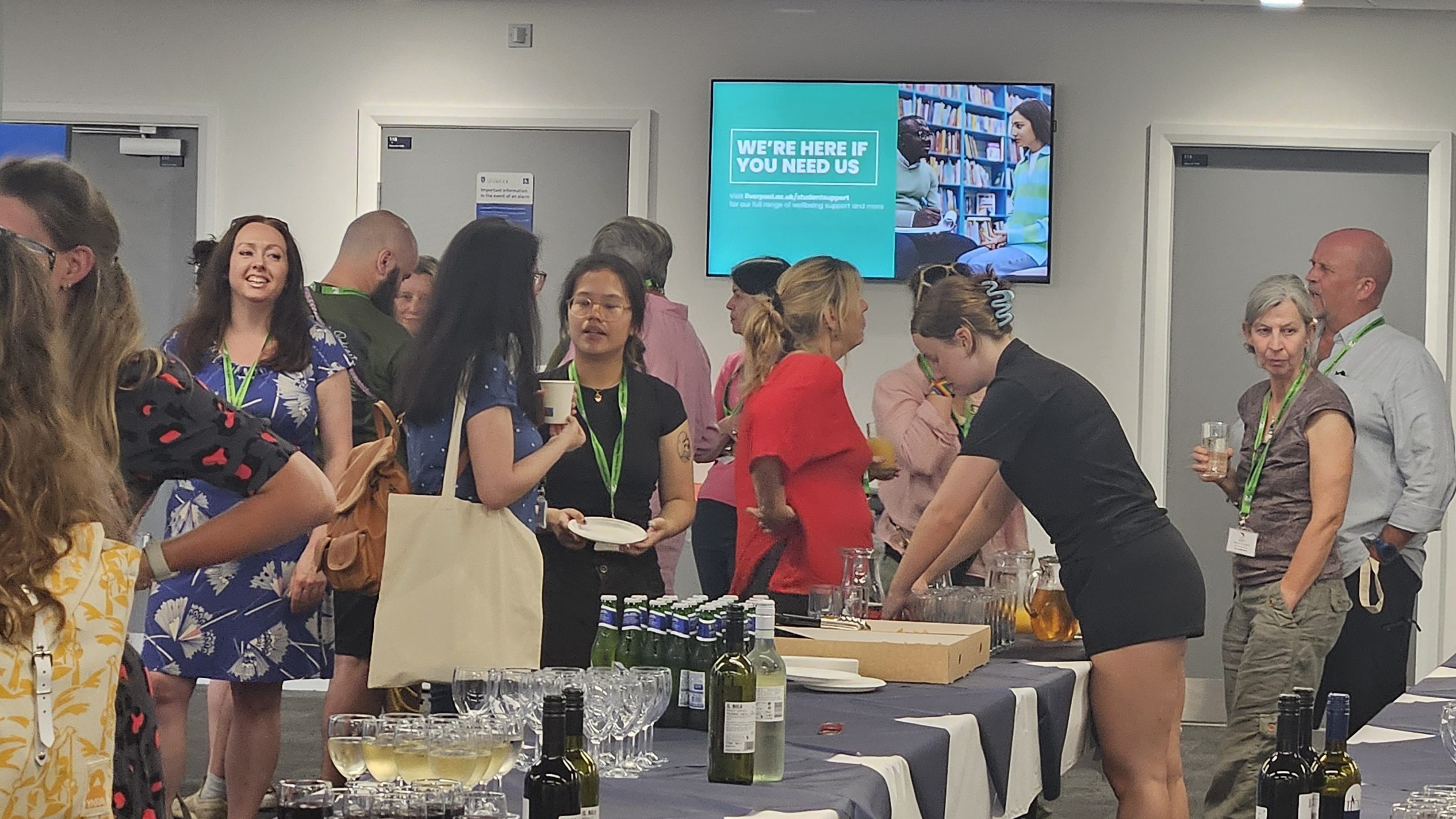
However, a few conversations with British practitioners made me feel like they understood how complex and nuanced Forest School practices should be. Many of them also held similar opinions against colonisation. During a dinner conversation with Mark Leather and Jenny, we were discussing in depth the impacts of colonisation on other countries, such as Singapore, and even in England itself. They shared my woes and how they felt like they disagreed with FS as a model to be transplanted and taken to other countries. Some other practitioners also conveyed their thoughts through a mysterious pamphlet, ‘Ruderal’, which discussed the ‘enshittification’ of Forest School practices. This enshittification results in/ leads to a degradation of FS practices.
Despite huge expansion of training programmes, practices, and certificates given out in the United Kingdom, it seems like Forest School practices have not improved in quality, and instead, degraded over time. This degradation has been attributed to practices such as the mass certification of practitioners, as well as the moving of forest school training online – a move which possibly became even more popular during the COVID-19 era.
Despite the increase in training and certification, the training programmes in the UK seemed to be steering itself away from properly training and developing practitioners. With the mass production of such training, it could mean that practitioners did not dive as deeply into the practice, and they were not thinking so hard about Forest School as a critical framework.
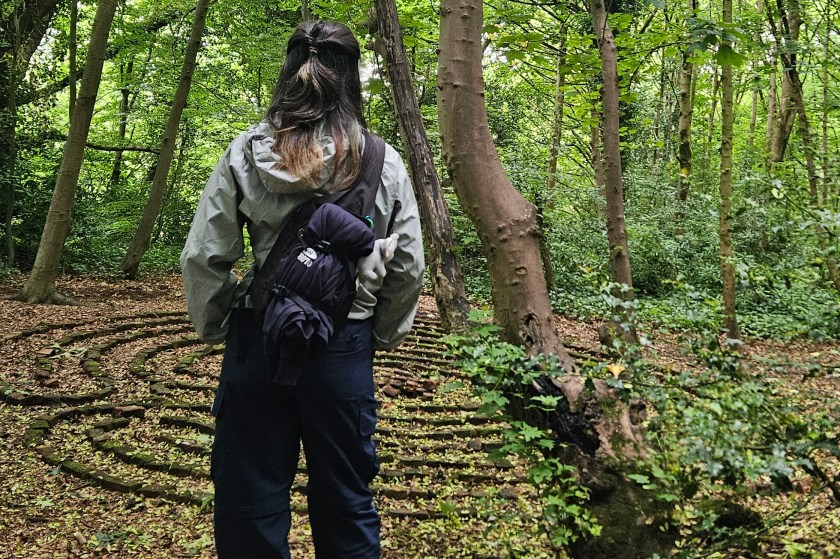
Ultimately, my time in the UK reinforced the idea that Forest School should not be a rigid model imposed uniformly across different contexts. Instead, it should be a flexible, evolving practice rooted in local environments and cultures. If anyone wants to do Forest School, being critical of the practice and allowing the practice to grow and evolve with time and he patterns of the universe is extremely crucial Only by fostering a deep, personal connection to nature and critically engaging with FS principles can practitioners cultivate a meaningful and sustainable relationship with the natural world as well as the community around us.
These experiences have deepened my understanding of ‘The Good Death’, or the process of death that Forest School Singapore is currently working towards. Instead of seeing death as the end of all things, I see it as the end of the beginning, or the end of a cycle, or a stage of transition between different states of life. By dying the good death, it allows FSS to move towards questioning and thinking critically about the FS movement in Singapore, as well as our role as practitioners.
Written by : Shin Ee
Edited by : Rachel Cheang

