
Everytime Boxing Day rolls around, I think about what had happened on this day in 2004, when an undersea earthquake measuring 9.1 on the Richter scale, the most powerful ever recorded in Asia, struck off the west coast of Sumatra. It resulted in tsunami waves across 14 countries from Indonesia to Thailand, Sri Lanka and even as far away as South Africa. The earthquake and tsunami claimed 280,000 lives. The hardest-hit region was Indonesia’s northernmost province of Aceh, with waves reaching 30 metres high, and where more than 160,000 people were killed.
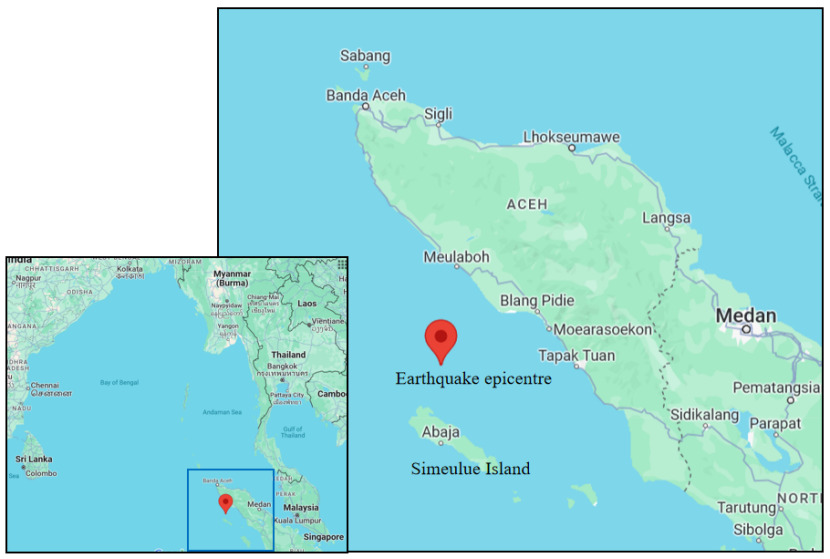
The epicentre of the quake was located between the island of Simeulue and mainland Sumatra, where Aceh’s capital city, Banda Aceh, sits. Simeulue experienced the tsunami about 15 minutes after the quake, while in Banda Aceh, the waves took 45 minutes to reach the shores. Interestingly though, Simeulue only saw 7 fatal casualties, whereas Banda Aceh recorded a death toll of 61,000. Prior to the tsunami, on the coasts of the capital city, people came to the shores when the waters receded and revealed fishes and corals. They hadn’t experienced a tsunami before, and didn’t know that the scene was nature’s way of warning them. But in Simeulue, residents were prepared. As soon as they saw the water retreating from the coastlines, they ran inland and up to higher grounds, shouting, “Smong, smong!”
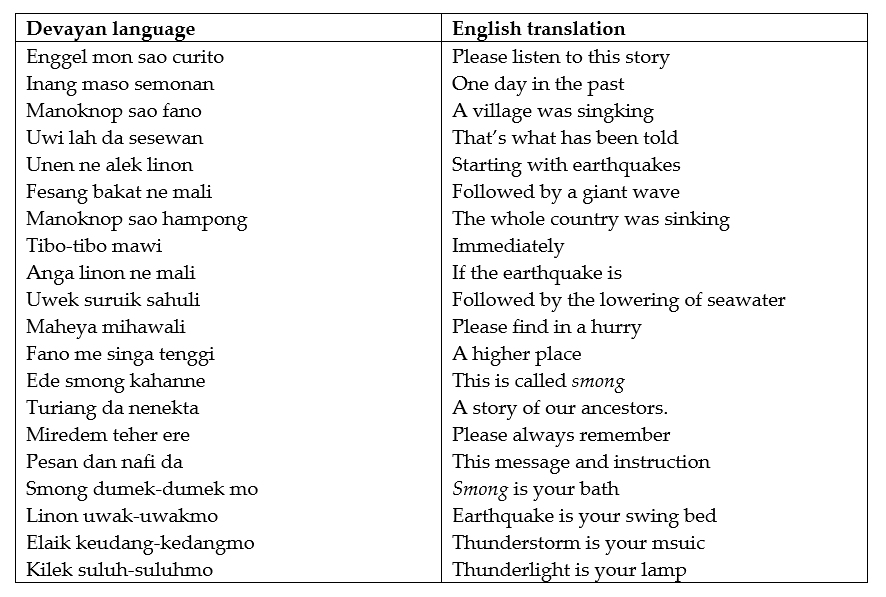
In Simeulue’s local Devayan language, smong refers to the occurrence of gigantic waves following a strong earthquake. Almost a century ago in 1907, thousands of inhabitants were killed in a smong. Its survivors created a nandong, a form of oral literature comprising words of advice, that serves as a tsunami warning system even before high-tech tsunami warning systems were put in place in the Indian Ocean. They wanted to tell future generations of what to do in the event of an impending smong. It is in large part thanks to age-old stories like this that a vast majority of Simeulue’s residents lived through the 2004 tragedy. In fact, there have been calls by researchers for the term smong to be a part of the Indonesian vocabulary that is spoken by residents living on an archipelago that is geographically vulnerable to natural hazards. Not only does the word refer to tidal waves. It also encapsulates the teachings of Simeulue’s ancestors, grounded in local wisdom that continues to save lives today.
Written by: Ilya Katrinnada

