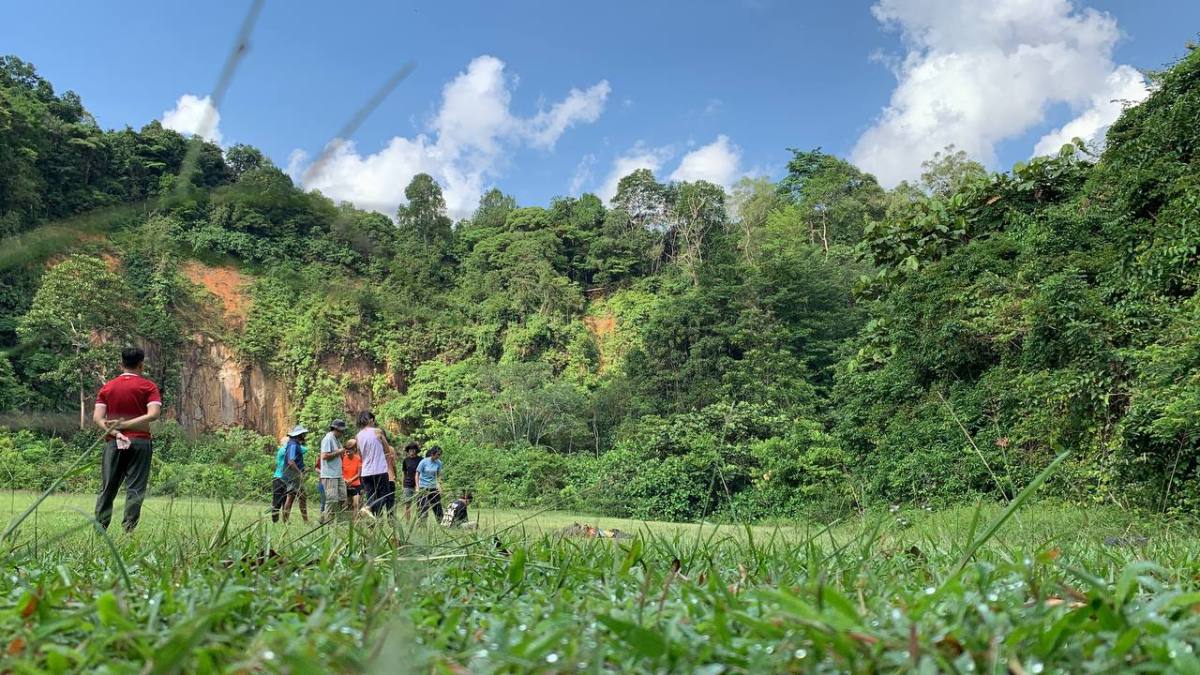
On a Saturday morning, the handphone rang at 9.45am. I woke up, seeing the vigorously vibrating phone, realising it was probably from the Saturday Forest School session that was on-going. A chill went through my body. I hoped and prayed that it was nothing serious. But as the Principal of the Forest School Singapore at that time, I knew that phone calls after the start of the sessions signified that the coaches on the ground were probably facing a situation that they needed to inform me about. I jumped off the bed and quickly picked up the phone……
This is the perpetual emotion and state of mind that hovers over me every week whenever there is a forest school session or camp session where I am not involved. As the leader I have to let go, and step back to allow others to experience coaching the FS sessions. However, my mind and spirit were never at rest. They stay alert almost constantly, awaiting for a situation that requires my presence.
This is the weight that a FS and Outdoor Education Leader / Manager carries.
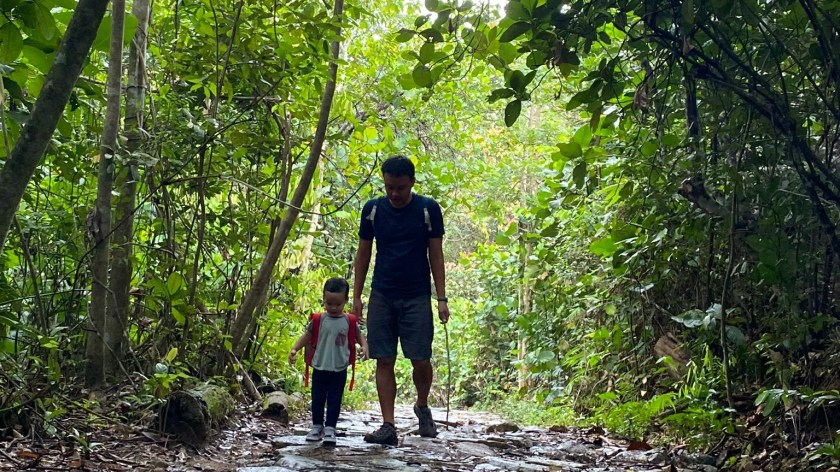
In the exercise of Outdoor Education,the elements of uncertainty and risk are high due to the nature of the work. We, the practitioners, carry out our practice in the outdoor environment with our participants with an extremely high vigilance even though we seem calm in the midst of the many “storms” of the outdoor education experience. We do it because we know the benefit and gains of the experience far outweighs the cost.
But any “cost” that comes in the form of a risk or possible danger takes a huge toll on us in a way that is hard to comprehend, unless one experiences it first hand.
Here is a list of things that outdoor education practitioners might experience:
– Hyper Vigilance in relation to risk management in programming.
– Depressed mood
– Strong need to talk about the event or read information surrounding the traumatic event.
– Recurrent images or thoughts of the event triggered by non-specific event
– Distress when exposed to events that remind them of the trauma.
– Trouble sleeping or sleeping too much.
These are the ‘symptoms’ identified in “Suffering in Silence : Impacts experienced by practitioners following serious incidents” Mitten, C., Dallat, C., Ajango, D. (2024)
The Silence Is Deafening: Exploring the Impacts of Serious Incidents on Practitioners Across the Outdoor and Adventure Programs Work System https://onlinelibrary.wiley.com/doi/full/10.1002/hfm.70017
I personally experienced every single one of them in my years as a forest school practitioner and outdoor educator. Some of them were so commonly experienced that I didn’t even realise I was going through the impacts until I read it in Denise Mitten’s presentation in IOERC in 2024.
Even writing this now brings up so many emotions and trauma-memories about those times I had to deal with serious incidents and near-misses in my time leading the Forest School movement. Though every episode made me a better leader, practitioner and person,the scars of trauma never truly left me.
During these incidents, making sure everyone is safe is our top priority, most of us practitioners won’t even think about our own liabilities or welfare. We go out of the way to address the issue from a physical, emotional and psychological standpoint. Only a few days after the whole issue is resolved does the second-victim effect really sink in.
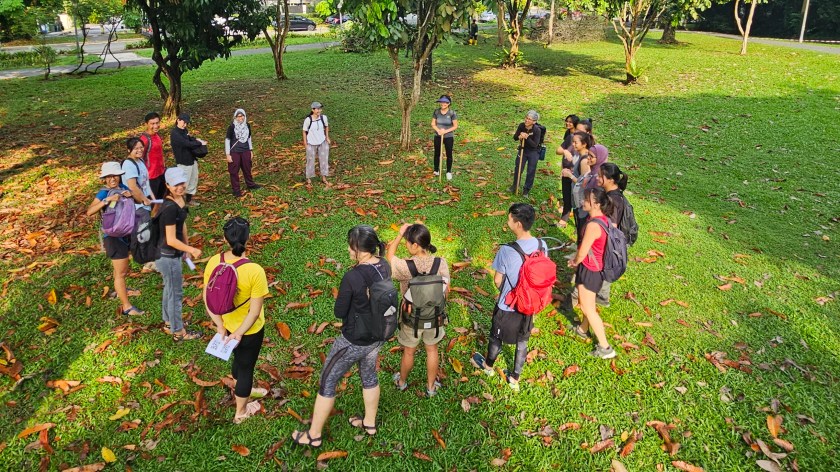
I believe I’m not the only one who has experienced this. Many practitioners and educators do too. Nobody chooses this line of work because we only want personal gain. Everyone does it with the wellness of the participants in the heart. When serious incidents happen, we will all put aside our own welfare for others, only to carry those pain and suffering on later, usually on our own… I won’t even talk about the folks who have to handle the after effects of fatal incidents.
These phenomena are largely hidden due to the complexity at hand. But if it were to be revealed, how can we face it as an individual and a collective community?
Our current approach in the modern industrialized world, takes on a logical but less human touch. We go on a witch hunt for the ones accountable for the accidents via Investigation to judge and point out all the responsible elements. After which we create policy, protocols and structures to prevent the incidence from occuring again and also to protect their own liability. If we study the details in depth, we will often find that they are more about liability coverage than real protection for the health and welfare of the participants and stakeholders involved.
On top of that, there is often a stark lack of attention and follow-up to care for the practitioners who are leading during the accidents. It’s often an accusational energy that circles around them in those moments. Sometimes the accusational energy even comes from the practitioner themselves, because they care.
There is an overemphasis on prevention rather than reconciliation. Maybe because in our modern living we have been conditioned so well to operate at a non-humanly philosophy towards problems, seeking patterns that we can control.
However, if we seek the counsel and wisdom of the culture and human civilisations of the indigenous, we may find a way of facing serious accidents that will heal our souls and community more than just pointing fingers.
In many indigenous societies, there is an implicit ritual of care that revolves around the understanding that our physical realm is not the only space we venture in. Therefore, life and death are experienced with a different perspective. Because of fate, incidents happen whether we want them to or not. This wisdom is understood by indigenous societies at a deeper level which many of them understand at a deeper level. This allows them to navigate the approach of dealing with serious incidents with a paradigm of reconciliation and care for the living, rather than condemning these difficult moments and treating them with shame or accusation.
An example of this wisdom I experienced was the way that people in New Zealand remember the ones who passed away due to accidents during outdoor adventure situations. They put plaques up in the locations of accidents, to remember the dead, and remind the living of the stories, instead of hiding from the event and keeping it away from the future generation. It’s an approach that is counter intuitive to the mechanical and judgemental approach of the modern societal paradigm of approaching serious incidents, where hiding supersedes facing them with heart.
“We came together after the incident to discuss and share our stories. We listen, we care and we embrace. We may not remove all uncertainty, but we can pay attention to each other here in Forest School. And in this song, we ended our resolution to what had happened…… “
Is it possible… that we can move from the accusation to a ritual of care? I’m not sure. But I hope…
Written by : Darren Quek
Edited by : Chong Shin Ee

