
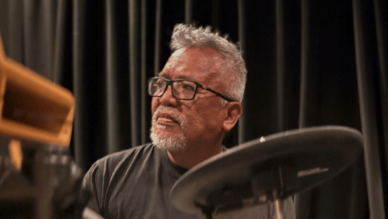
by Abdul Shukor Haji Ramli
May 2013 – reviewed July 2026
This paper is written after many years of observing outdoor education through the eyes of an educator, counsellor and facilitator of human development. For a long time, I hesitated to put these thoughts into writing. They question practices that have become familiar and accepted. Yet every discipline must occasionally pause to ask whether it is still moving towards its true purpose.
Much of today’s outdoor education has become organised around facilities, activities and schedules. Success is often measured by programmes completed, itineraries delivered and logistical efficiency. Increasingly, programmes are designed for large groups, sometimes involving hundreds of participants at one time. Such approaches answer the demands of institutions, policies, resources and operational realities. For now, they do have their place and continue to serve important purposes.
My concern, however, is whether these have gradually shifted our attention away from the person. Outdoor education was never meant to be an efficient production of experiences. Its deeper purpose is the deliberate formation of character, judgement, wisdom and behaviour. When the programme becomes the destination rather than the individual, we risk confusing activity with education.
I recognise that meaningful change within institutions is rarely immediate. Policies, operational requirements and organisational complexities often shape what can realistically be achieved. This paper is therefore not written as a criticism of current practice, but as an invitation to reconsider its direction. I hope these perspectives contribute to a broader conversation, encourage further research and provide one possible framework for those seeking to advance outdoor education beyond the delivery of activities towards the intentional development of human beings.
The title focuses on a point when my dreams are in one sentence, covers all my thoughts like one single picture. That the foundation of intentional outdoor education begins long before the programme is designed. It begins with understanding the architecture of human development.
Before deciding what activities to conduct or what methodology to employ, we must first understand the person whom the programme is intended to develop. I find it difficult to design any meaningful outdoor intervention without first studying how human beings grow, think, feel and change throughout life.
The works of pioneers such as Carl Jung, Sigmund Freud and Erik Erikson, together with many contemporary researchers in developmental psychology, remind us that every stage of life presents different developmental tasks, conflicts and opportunities. An infant, an adolescent, an emerging adult and an older person do not interpret the same experience in the same way.
The mountain remains the same, but the meaning carried home is often entirely different. Human behaviour is never random. It is shaped by countless influences. Our upbringing, relationships, beliefs, successes, disappointments, culture and accumulated experiences form the lens through which we perceive the world. Even our emotions, though often appearing unpredictable, following patterns that can be understood with careful observation and sound psychological knowledge.
This understanding offers an important implication for outdoor education. If human behaviour can be understood, it can also be intentionally influenced. This is the very principle upon which education, counselling and psychotherapy are built. Behavioural change is neither accidental nor mystical. It emerges through deliberate experiences, meaningful reflection and carefully structured interventions. In many of my works designing programmes for youth-in-needs (not to be confused with youth with special needs), I often introduces the works as Structured in programme, yet flexible in execution. The flexibility lies in manoeuvring the activities, as we negotiate to meet the objectives dependent on the youth’s actions and reactions.
Therapy has its theories, principles and frameworks. It has foundations before techniques and architecture before construction. I believe outdoor education deserves the same discipline. Before designing an expedition, we should first design the developmental journey. Before selecting an activity, we should understand the human quality it is intended to cultivate. We are not merely planners of programmes. With knowledge, training, and certifying papers, we are the architects of human development.
Outdoor education has travelled a long way. In Singapore alone, the craft renews itself almost every two decades to be better equipped, more technically competent or more conscious of safety than it has ever been. We begin to design programmes with precision. We assess risk with care. We deliver adventures people remember for years. And yet, beneath all this progress, one question keeps surfacing quietly, the way a spring keeps finding its way through rock no matter how much soil is packed above it. And the probable reality is, programmes tend to repeat, copy and paste, where training and programme safety documents set in Changi-Prison-Complex-like security, locked and key kept by the senior guardians that wanted to remain as ‘legends’ of that sacred itinerary.
In the ever changing environment and social complexities, over the years, change and behaviour adaptation, what is the person meant to become? Then and Presently. The perspectives presented in this paper are not formed solely through academic study, nor solely through years spent in the outdoors. They emerged from the continual meeting of both. While I have been in the outdoor education industry as professional for 37 years now, over eight years, my studies in counselling, developmental psychology and counselling psychology provided a deeper understanding of how people develop, how behaviour is formed and how meaningful change occurs. Rather than leaving these theories within the classroom, I sought to examine them in the realities of the outdoors, where uncertainty, challenge and reflection naturally intersect.
This understanding was further strengthened through advanced training in wilderness therapy with the New Zealand Māori Youth and Family Centre. There, I witnessed how nature becomes purposeful only when guided by sound psychological principles and intentional therapeutic practice. The outdoors itself does not heal. It is the deliberate design of experience, relationship and reflection that allows healing and growth to emerge.
For more than two decades, I have applied these principles in programmes for youths in need, incarcerated youths, youths at risk and students from mainstream schools through organisations such as Outward Bound Singapore, Raffles Institution for Experiential Learning and Assumption Pathway School. Across these varied settings, one conviction has remained unchanged. Lasting transformation does not begin with the activity. It begins with understanding the person.
The work has never been simply to organise expeditions or facilitate adventure. It has always been to create intentional developmental journeys that help young people understand themselves more clearly, make wiser choices and discover that change is possible. Equally important is helping them recognise the ecosystem surrounding their lives, for sustainable growth rarely occurs in isolation. People change most effectively when they can see not only who they are becoming, but also the relationships, environments and communities that make that transformation is possible.
For too long, the field has measured itself by what people do. We celebrate summits reached, rivers crossed, caves explored and long journeys completed. We speak proudly of endurance, teamwork and foremost achievement. These are real experiences but they describe distance travelled, not direction taken. And the true destination was never a place. It was always the Person.
“A programme is successful when it is completed. Outdoor education is successful only when the person continues changing after the programme has ended.”
A mountain has never produced courage. A river has never taught leadership. A cave has never built resilience. Nature holds no hidden power to transform anyone. It only reveals the person already standing there, the way still water shows a face that was there all along. I often remind myself that no activity possesses educational value on its own. Its value depends upon the person standing within it.
Many years apart, I witnessed two participants undertaking the very same role on the very same sailing schooner.
In 1998, Fuad, a twenty four year old incarcerated youth, was appointed navigator. His responsibility was to read the sea chart, determine the vessel’s position and guide the captain towards the next waypoint. It was a simple task. For several hours, he remained focused on the chart, the compass and the sea. At the end of the voyage, Fuad quietly shared that it had been one of the best days of his life. For the first time in many years, someone had entrusted him with responsibility. He felt accepted. He felt capable. He felt that his decisions mattered. Guiding the captain across the sea became far more than navigation. It became evidence that he could contribute to something greater than himself. That experience became part of how he began to see his Future.
Five years later, on another voyage, Lionel, a twenty seven year old senior officer trainee, was given exactly the same appointment. He too navigated from the same sea charts. He too guided the captain through the same waters. His reflection could not have been more different. He described the exercise as a waste of time. He questioned why anyone needed to spend hours following charts and plotting bearings when the destination could already be seen across the sea. To him, the activity had little relevance to his profession and offered no meaningful lesson.
The programme was identical. The activity was identical. The learning was not. The difference did not lie in the schooner, the sea chart or the voyage. It lay within the person. Fuad was searching for belief in himself. Lionel was searching for efficiency. Each interpreted the same experience through the lens of their own developmental needs, personal history and purpose in life.
This is why outdoor education cannot assume that an activity produces a predetermined outcome. A mountain does not teach perseverance to everyone. A river does not build teamwork in every group. The same expedition may awaken hope in one person, indifference in another and frustration in a third. The educator’s responsibility, therefore, is not merely to deliver the activity. It is to understand the person before selecting the experience. Only then can the experience be intentionally designed to cultivate the human qualities we hope will endure long after the journey has ended. So the outdoors is not the curriculum. It is the classroom. The curriculum is something else entirely the deliberate shaping of character, judgement and wisdom. And this is where outdoor education must evolve with every expedition should begin with intention before itinerary.
Before choosing the mountain, know the lesson. Before mapping the route, understand the human quality you hope to cultivate. Every activity must answer one honest question, why this experience, for this person, at this moment? Without intention, an expedition is only tourism or recreation wearing a harness. Activity should always serve intention, never the reverse. With intention, every step becomes education.
A compass does not move the seafarer. It simply tells him which way is true. Intention works the same way it does not complete the journey, but it gives every step its meaning. For years I believed that tough environments built strong people. Experience has since taught me something more precise, which is that challenging environments expose people.
Two people may perform the same action, yet arrive at entirely different destinations. A young person may be instructed to climb a mountain. One climbs simply because the programme requires it. Every step is directed towards reaching the summit. Once the photograph is taken, the purpose has ended. Another climbs the same mountain with a different intention. Before setting out, the facilitator invites the participant to dedicate every difficult step towards developing patience when facing conflict at home. Every steep ascent becomes a reminder that difficult paths often lead to worthwhile places. Every pause becomes an exercise in self control rather than surrender. The summit is no longer the objective. It is merely the setting in which patience is practised. The mountain did not change. The intention did.
That’s how I felt in 1984 climbing Mount Ophir at 14 years old. Humble monster came back on the mountain in Annapurna, Nepal, at 53 years old. Sole intention in my mind, “a hot caffe latte, in the teahouse”, yet, what I learnt were far greater, more than the steps I took, dead slow. “Alhamdullillah, as avid seaperson, a kayaker, sailor, I had done it.”
In Islam, this principle is beautifully captured through the concept of Niyyah. Actions are not judged merely by what is done, but by the intention from which they arise. The same outward action may appear identical, yet its purpose gives it an entirely different meaning. Intentional outdoor education, to me, follows the same principle. Activities alone do not educate. It is the intention that transforms an activity into a developmental experience. A canoe journey can become an exercise in leadership. A night walk can become an encounter with courage. A navigation exercise can become a lesson in judgement. Without intention, they remain activities. With intention, they become instruments for human development.
This is why the educator must first ask, “Who is this person becoming?” before asking, “What activity shall we conduct?” The activity is chosen only after the developmental intention has been made clear. In many ways, niyyah is the first step of programme design. It gives direction before movement and purpose before action. Growth only arrives when reflection follows exposure. Experience alone does not produce growth. If it did, every person who climbed a mountain would become courageous. Every team that rafted down a river would become united. Every leader who completed an expedition would become wise. We know this is not true. People may share the same experience and return unchanged. Some even repeat the same mistakes despite years of experience.
Experience can only exposes. It is the Reflection that transforms.
The outdoors presents challenge, uncertainty, discomfort and consequence. It reveals habits that often remain hidden in ordinary life. While Fear surfaces, it may comes with Pride as well. When Impatience becomes visible, the person’s Judgement is tested. Hence, Character is uncovered. Yet revelation is not the same as transformation. As facilitator, the ability to be seeing these, is only the beginning. Growth begins when the keen observant facilitator asks why those behaviours appeared and whether those behaviours should remain, to face more distance, or sufficiently to keep the pride from further damaged, embarrassed and guarded.
Reflection is the bridge between experience and meaning. This is where an experienced facilitator, guides, educators, therapist and plain empathetic friend is needed to facilitate what happened into those learning from reflection. Without reflection, an experience remains an event that eventually becomes a memory. With reflection, the same experience becomes understanding. Understanding becomes insight. Insight influences future decisions. Repeated decisions gradually become behaviour. Behaviour, practised over time, shapes Character.
This is why reflection is not an activity conducted at the end of a programme. It is the engine that drives transformation. It is where participants connect what happened with why it happened. It is where they discover not only what they did, but who they were while doing it. Most importantly, it is where they decide who they wish to become the next time they encounter a similar situation.
A participant who panicked while crossing a river may initially believe the lesson was about rivers. Through careful reflection, they may realise the river merely revealed how they respond whenever uncertainty enters their life. The river disappears at the end of the expedition. Their pattern of response may remain for years unless it is recognised and intentionally changed. This distinction changes the role of the outdoor educator. The educator is not simply an organiser of experiences but a facilitator of meaning. The activity creates the opportunity.
Reflection unlocks the lesson.
Without it, the programme risks becoming adventure.
With it, adventure becomes education.
Growth, therefore, does not occur because an experience happened. Growth occurs because the experience was understood, examined and intentionally carried forward into the person’s life. Reflection is the moment when an expedition ends as an activity and begins as a lifelong Teacher. This changes what an outdoor educator actually is. We are not organisers of activities. We are architects of transformation designing uncertainty so judgement can sharpen, placing responsibility where leadership can awaken, allowing manageable hardship to temper resilience the way current tempers stone.
Technical skill still matters enormously, like knots, rescue technique, navigation, paddling and climbing. Lives depend on these. But beneath every technical proficiency lies a second unmapped landscape that deserves equal attention. Such as fear, ego, humility, trust, responsibility, attention, decision-making and character building. Every expedition is travelled three times, once across the land, and twice more within, cognitively and emotionally. The widest terrain we ever cross is not printed on any map. It lies inside the mind of the person walking.
Much of what determines human behaviour cannot be seen. We often observe only the outward action. A person hesitates before an obstacle. Another argues with a teammate. Someone refuses responsibility. Another makes a poor decision under pressure. These behaviours are visible, but they are rarely the true beginning of the story. Every visible behaviour is preceded by an invisible process. Fear shapes whether a person advances or retreats. Ego influences whether advice is accepted or rejected. Humility opens the mind to learning. Trust determines whether responsibility is shared or withheld. Responsibility influences whether commitments are honoured when no one is watching. Attention governs what is noticed and what is ignored. Decision making determines the path that follows. Together, these qualities gradually reveal what we recognise as character. Character is therefore not a single trait. It is the consistent expression of many invisible qualities working together.
The outdoors provides a unique environment because these inner qualities become difficult to conceal. Challenge removes comfort. Uncertainty removes routine. Consequence demands choice. In these moments, people reveal not who they claim to be, but who they have become.
This is why intentional outdoor education should not be satisfied with observing behaviour alone. Behaviour is only the surface. The educator must look beneath the action and ask what inner quality produced it. A participant who refuses to cross a river may not lack physical ability. The greater obstacle may be fear. A leader who dominates every discussion may not possess confidence. The underlying influence may be insecurity expressed through ego. The behaviour is merely the symptom. The developmental need lies beneath it.
When these invisible qualities become the focus of programme design, activities begin to serve a clearer purpose. A river crossing is no longer about crossing a river. It becomes an opportunity to recognise fear. A navigation exercise is no longer about finding direction. It becomes an opportunity to strengthen judgement and responsibility. A team challenge is no longer about completing a task. It becomes a means of cultivating trust and humility. The educator’s task is therefore not simply to change what people do. It is to understand why they do it. When the invisible qualities are intentionally developed, visible behaviour begins to change naturally. Sustainable transformation starts within the architecture of the person before it is expressed through action.
Modern psychology and neuroscience have simply given language to what experienced instructors have long watched happen on the trail as stress narrows attention, fatigue weakens judgement, emotion bends perception, confidence curdles into overconfidence and, panic shortens thought. An embarrassed feeling shall reject the idea of carrying large watermelon on a trek. A calm mind will often finish what a stronger body cannot. These are not just clinical observations but are teachable moments. When a participant learns to notice what is happening inside them while it is happening, they begin to master something larger than any wilderness, themselves.
Perhaps this is where success in this field should actually be measured not by how high someone climbed, how far they paddled, or how quickly the mission closed, but by quieter questions. Did this person become more dependable? Did they pause before reacting? Did they listen before leading? Did they stay honest when no one was watching? Did they grow calmer inside uncertainty? Did they leave carrying more responsibility than they arrived with? These are the outcomes still standing long after the tents are folded and the gear is packed away.
None of this belongs to wilderness alone. Forest, sea, mountain, city street, hospital ward, classroom, workplace and family dinner table, each can become the same platform, because character is not formed by geography. It is formed by honest encounters with responsibility, keen observation, empathetic heart, uncertainty and reflection. Nature simply offers one of the purest versions of that classroom, because it strips away the noise that ordinary life keeps supplying. Primary culprits, possibly, judgemental, embarrassment, assumption…
So the question the profession must learn to ask is no longer what activity shall we run? It is, what kind of human being are we hoping to shape? Everything else, the mountain, the river, the cave, the itinerary should follow from that answer, the way a river follows the shape of the land rather than the other way round.
The Arabic niyyah, the Malay niat and nawaitu, intention remind us that every meaningful journey begins long before the first step is taken. A journey without direction is only movement.
A journey carried by sincere intention becomes worship, learning and transformation all at once, as old Malay wisdom already knew: “Bukan jauh langkah yang meninggikan manusia, tetapi benar arah yang dipilihnya” it is not the distance of one’s journey that elevates a person, but the truth of the direction chosen.
Perhaps that has always been the real work hiding inside outdoor education. We never truly take anyone into the wilderness. We take them toward themselves. The forest removes the noise. The river strips away certainty. The mountain humbles pride. The storm exposes how well one actually prepared. Silence reveals what a person has been thinking all along, whether they intended it to be seen or not. These, to me, are the true ingredients of adventure not summits, but the quiet erosion of everything false.
Every building begins with a structure no one sees. The walls impress the eye, but they stand only because something deeper bears the weight. Human development works the same way, the behaviour is the visible wall, but the character is the hidden foundation. Too often we try to change behaviour directly, dressed up in contracts as “objectives” telling people to be more confident, to communicate better and to lead well. These are fair aspirations, but behaviour rarely changes for long unless something underneath it has first been rebuilt.
A person who has never practised judgement cannot simply be told to decide more wisely mid-expedition. A person who fears responsibility cannot be lectured into courage. The foundation beneath the behaviour has to be strengthened first which is precisely where intentional outdoor education holds a rare advantage as it functions almost like therapy, even if the word itself makes many institutions flinch.
Nature does not listen to excuses. It answers only to decisions. It does not reward confidence, nor does it punish fear it simply responds to the quality of one’s judgement, indifferent to title, experience or reputation. Every choice out there carries its own consequence, immediate and unfiltered. It is here that people meet themselves honestly, sometimes for the first time in years. The sea and the tropical forest, in particular, become a living laboratory of human behaviour.
Every hesitation uncovers an inner conversation nobody else can hear. Every choice reveals a belief the person didn’t know they were carrying. These moments are the real material to be worked with not the activity itself, but what it quietly exposes about the person doing it. An educator who understands this stops watching only what a participant does, and starts noticing the architecture producing it. Behind impatience may sit insecurity. Behind silence, fear. Behind the need to control, uncertainty. Behind anger, helplessness. Behaviour becomes the window. The task is never simply to point at what shows through the glass, but to help rebuild the structure behind it, so that healthier behaviour can rise on its own, the way a riverbank reshapes itself once the current beneath it changes.
Psychology offers real insight here not as theory to recite, but as another compass for reading human nature. Still, insight alone changes very little. Understanding without practice becomes forgotten wisdom quickly, the way a lesson learned on a summit can evaporate by the time someone reaches the car park. Transformation only takes root when understanding is lived, repeatedly, in ordinary conditions. A participant who learns to pause before reacting on a hard expedition may begin doing the same at home. Someone who finds the courage to ask for help crossing a flooded river may later find the humility to ask for guidance in marriage, in parenthood, in leadership. Behaviour changes because identity has quietly changed first.
This is why reflection is never the conclusion of an expedition but it is the bridge that carries experience into everyday life. Without reflection, experience becomes only memory. With it, experience becomes wisdom.
The purpose of intentional outdoor education, then, is not to produce successful expeditions. Safe definitely a yes. It is to cultivate better human beings, people who think before they act, who stay composed before they decide, who lead without chasing power, who serve without expecting applause, who remain competent yet humble enough to keep learning. The greatest achievement of any education is not a sharper mind. It is a trustworthy character.
Every experienced outdoor educator eventually arrives at the same quiet truth that the dense forest, the steep ridge, the dark cave, the raging river never changed anyone. People changed themselves, because for one uninterrupted moment, nature took away every distraction that had been hiding who they truly were.
Perhaps that is why the finest outdoor educator is never remembered for the adventures they organised. They are remembered because somewhere along the trail, in the quiet between two footsteps, someone became a slightly better human being. That, in the end, is the whole intention, not beyond the mountains, but beyond the trail, designed by the architects who reads his human clients development.
Abdul Shukor Haji Ramli
Written May 2013 – reviewed July 2026
Abdul Shukor Haji Ramli is an outdoor educator, facilitator, and programme developer whose work has spanned more than three decades since 1991. As the Founding Director of Explora, Programme Development Director of Explora Asia, Principal Trainer of Mountain Academy, and Risk and Safety Review Leader, he has dedicated his career to advancing outdoor education as a deliberate process of human development rather than simply adventure or recreation. His work centres on the belief that meaningful growth occurs when purposeful experiences are guided by reflection, sound judgement, and intentional facilitation.
Drawing from counselling psychology, sports and performance psychology, wilderness therapy, expeditionary learning, and technical outdoor leadership, Abdul Shukor designs experiential learning journeys that cultivate resilience, leadership, emotional awareness, teamwork, and behavioural change. His facilitation philosophy integrates challenge, uncertainty, and nature with structured reflection, enabling participants to translate experience into lasting insight and purposeful action. His professional contributions extend across schools, government agencies, uniformed organisations, correctional services, and community development. He has led long term mission based leadership programmes for the Singapore Police Force, Singapore Prison Service, Ministry of Education, and numerous public institutions, while also contributing to wilderness therapy initiatives, facilitator development, risk management systems, and high adventure programme design throughout the region.
Supported by extensive qualifications in outdoor leadership, psychology, wilderness medicine, technical rescue, challenge course management, and adult education, Abdul Shukor’s practice is grounded equally in professional competence and educational purpose. His work continues to advocate for an intentional approach to outdoor education where the destination is not the mountain, river, or expedition, but the development of human character, judgement, and wisdom.

