By Chong Shin Ee
Last updated 26 October, 2023

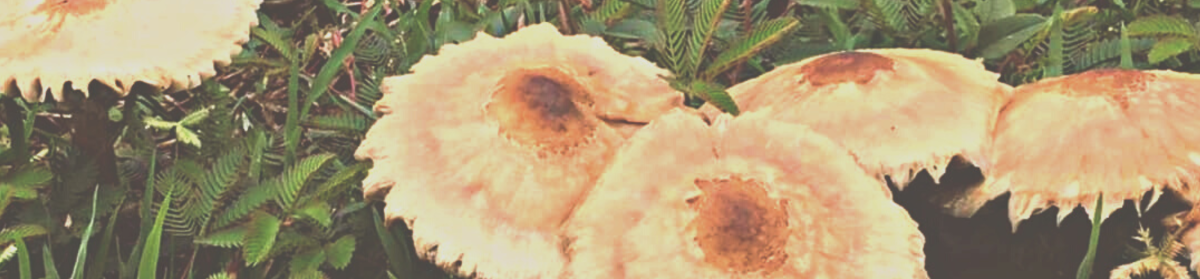
Fig. 1: A typical day at Forest School Singapore.
In the summer of 2023, I had the opportunity to join Forest School Singapore (FSS) for three months as an intern. While I had some preconceived notions of what FSS might be like – the unbearably hot outdoors, working with children, immersing myself in nature, my actual experience transcended by own expectations as I soon realised the depth and dimension of the Forest School (FS) practice at FSS. During my internship, I was first introduced to forest school through chats with Darren, as we hiked around Rifle Range Nature Park as well as Keppel Hill (which has now become almost beloved to me). While hints of the practice trickled in via the conversations I had with him, experiencing the actual reality of an FSS session was like being hit in the face by a gust of strong wind, or perhaps even like jumping straight into the eye of a hurricane. I attended almost all four weekly sessions each week for a month, and then attended more than half of the holiday camps that Forest School Singapore held during June. On top of that, there were the training sessions that I experienced: getting stuck in the mud at Clementi Forest, climbing up Keppel Hill (and getting judged for being unsure of myself), learning to start a fire, and even a tiring but rewarding overnight hike. Then there were also the informal ‘training’ sessions, which came from the extended lunch sessions with the other forest school coaches, drinking sessions, and even tarot card readings. The range of topics discussed during these conversations were astoundingly diverse: from artificial intelligence, to dying, and even to topics like developing the edible insect industry in Singapore. The immersive experience was one that became incredibly personal, even exposing parts of myself to me and those around me, parts that I did not even know about. One thing was clear: there was something quite special about the practice at FSS, a culture and experience that I had never experienced in Singapore.
During my initial stay at FSS, I was tasked with ‘research’, the object of which was initially unclear to me. Darren actually felt like he was being purposefully vague in handing me the task of research, where he did not state what goal this research was supposed to fulfil. However, I think that he actually afforded me a great deal of freedom, and agency, in charting the direction of this research, which also took on a personal dimension. The more I embarked on the FS journey, the more I felt myself comparing my own educational experiences with that of Forest School’s. Education was already a topic that I was already passionate and interested about, so I felt that it would only be right for me to talk about it in relation to Forest School.
What is Forest School?
Before embarking on the research proper, it is first important to understand and define what we mean by ‘Forest School’. Forest Schools are defined by the Forest School Association as ‘nature-based communities where trained practitioners nurture learner-led exploration and discovery, nurturing meaningful experiences for positive lifelong impacts1’. While the movement first began in Denmark, it has slowly made its way across countries, first within Europe, and then to other countries such as Singapore. However, it is important to note that though the pedagogy is termed ‘Forest School’, there might be other similar ways of teaching and education that fall under the same category, but just under a different name. For example, Japan’s ‘forest school’ movement did not stem from the West, but came from the country’s close relationship with nature that persisted throughout history. Particularly, we also have to acknowledge that ‘nature-based communities’ are not a unique invention of Western civilisation, but have actually been part of many indigenous or native traditions worldwide, where communities have close ties to the land and mutually interdependent relationships with nature.
Though many different groups, civilisations and communities have found their own ways of nature-centric education, the ‘Forest School’ that I am referring to in this research paper does not strictly follow any particular strand of Forest School pedagogy or framework. While FSS’s philosophy and pedagogy might reference other FS movements, or even indigenous schools of thought, I think that the philosophy we are working with at FSS is strictly one unique to the organisation and the local community. For FSS specifically, there is a strong emphasis on the ‘community spirit’, and in being the ‘village that helps to raise the child’, so that people can be brought into the ‘space between the earth and the stars2’. Despite the grounded nature of the movement with its emphasis on building a strong community spirit, there is also the spiritual element that comes into play when individuals delve deeper into the philosophy and practices of Forest School.
1 “Forest School Association | What Is Forest School? | Forest Schools | Nature Premium.” n.d. https://www.forestschoolassociation.org/.
2“Philosophy.” 2022. Forest School Singapore (FSS). November 22, 2022. https://forestschoolsingapore.com/about/.
Methodology
When I embarked on this research, I used a mix of primary and secondary sources of data to gather information about Forest School Singapore.
In my research, as participant observation was a key part of my research, where I fully immersed myself in the FSS environment, I undertook what sociologists and anthropologists call the embodied fieldwork approach, which is an approach that highlights how one’s body is an acting, living and experiencing agent. Rather than trying to achieve a value-neutral analysis of my surroundings and my environment, this approach highlights the importance of my own subjectivity, and how my surroundings mediate my own subjectivities. Additionally, the social interactions around me would form a network of inter-subjectivities, where each person influences and is influenced by one another, including myself as the researcher. The participant observation, as mentioned earlier, involved the weekly FSS sessions, the training sessions, as well as the informal ways that I was immersed and exposed to the FSS ways and philosophies.
I also utilised interviews with different FSS coaches to gather their opinions on forest school with regards to education. Some of these interviews have been verbal, face-to-face interviews, while others have chosen to reply to my interview question via writing. By interviewing a wide range of coaches and people involved in Forest School, I could see how they held different perspectives on the FSS ways, but also how these perspectives sometimes overlapped and became one.
Other than consulting coaches, I tapped on existing interviews and discussions held with parents of the children attending FSS. The parents of these children would provide a contrasting perspective to the FSS coaches, since they were the direct stakeholders and guardians of the children, who are supposed to benefit from the FSS experience.
Secondary sources utilised in this research include the Forest School Library, which is a page on the official website containing many stories, anecdotes and personal opinions relating to the FSS experience.
Forest School as a Way of Life
In this article, I will compare the Singaporean education system with Forest School Singapore’s (FSS) approach to education. This comparison is not to suggest that one system is better than the other, but to bring out the point that alternative forms of education other than the mainstream are available, and to see the ways in which FSS and the mainstream Singaporean education system can complement or contradict one another. Although there are alternatives to the mainstream education system, such as homeschooling or private schools, the reason for focusing on the mainstream is because, as its name suggests, is the main form of education undertaken by most Singaporean students. I argue that Forest School Singapore provides a framework of education that departs very sharply from the norms in Singapore, given that its goals are starkly different from mainstream forms of education. With this sharp divergence from normative standards of education, I argue that there are many affordances: namely, in how FSS tries to cultivate a holistic understanding of the self, the world and the universe.
We have to first recognise that the main goals, system and structures surrounding the mainstream Singaporean and FSS are completely different, and sometimes even contradictory. The Singaporean education system, under the Ministry of Education (MOE), is largely designed to prepare humans for the workforce, which in the Singaporean context, is a necessary form of life preparation. ‘Education in Singapore has always been a handmaiden to the nation’s dual role of sustaining economic development and establishing a sense of national identity’, researchers Horsky and Chew write3. On the other hand, Forest School, with its child-led approach and unstructured curriculum, aims to prepare humans for the vagaries and dynamism of life4, by allowing them the space to connect with the community, nature, themselves, and the universe. Though the two seemingly serve different goals, and use different means, I believe that both actually have the common overarching goal of preparing students for ‘life’.
However, there are differing definitions of ‘life’ – each model suggests that life begins at a different age. In my schooling years, it was not uncommon to hear the phrase ‘when you grow up’, or ‘when you get to the real world’, uttered by teachers, parents and even my peers. ‘The established structures of mainstream school seem to suggest that life happens after school-going years, e.g. when a person is an income-producing member of society’. Many scholars have written about the ideology of pragmatism in postcolonial Singapore, which is ‘an ideology that embodies a vigorous economic development orientation education that emphasises science and technology and a centralised rational public administration5’. Understanding the historical context of Singapore, we can see that the small nation-state has faced problems such as land scarcity and the lack of natural resources since the outset of its independence, and has used this pragmatic approach, under more authoritarian forms of governance, to approach the issue of resource scarcity. In fact, this ideology of pragmatism extends to all aspects of Singaporean society, including our education system. Chiong and Lim, who write about neoliberalism in Singapore’s education system, state that the “developmental Singapore state has long exercised ideological leadership…over economy and society’ where ‘principles of competition, diversification, human capital, development and individual and familial responsibility for success pervade Singapore’s education system6’. The education system, which serves the state goals of economic development and growth, seems to suggest that life only begins when one reaches a working age as an economically-productive member of society.
Under this pragmatic approach to governance and the education system, students are placed within rigid structures and frameworks that emphasise the importance of academic achievement. At the young age of 12 years old, students undergo the compulsory Primary School Leaving Examination (PSLE), which for some parents and students, is an extremely high-stakes examination that could denote the kind of futures that belonged to a child. Furthermore, post-PSLE, students are streamed into different educational streams based on their academic performance. Within schools, there is also a very limited choice of subjects that a student could choose to take. Under Singapore’s ideology of pragmatism, an emphasis on mathematics and the sciences is present within schools, where higher-level courses and topics on these areas are present across many schools. In contrast, students who might be interested in the arts or the humanities are given little choice in pursuing these areas of study at a pre-university level: for example, students are allowed to take ‘triple science’ but never ‘triple humanities’, and subjects like art or music are only examinable in certain schools. Therefore, the Singaporean education system not only places pressure on students to excel academically, but also streamlines students into certain subjects that would mould and shape students into productive members of the future workforce.
Scholars in education have also mentioned the idea of a ‘hidden’ or ‘hegemonic’ curriculum, which is an informal and unintentional curriculum that is not explicitly taught to students, which occurs through the social interactions, modelling or school culture, and which serves to inform students of the unspoken norms, values and culture that schools are subtly teaching. This hidden curriculum can include things like school rules, which can teach students to observe and defer to authority figures in schools, and the demarcation of ‘good classes’ versus ‘bad classes’, which implicitly teach students that there are certain moral, social and academic scripts that they have to follow in order to be regarded as a ‘good student’. For example, a ‘good student’ who is obedient, non-disruptive and studious might be rewarded by being appointed to positions like the prefect, while the so-called ‘bad’ students, who tend to be more boisterous, messy and ‘misbehaved’, are punished or disciplined. These two contrasting experiences can inform a young child about the right attitudes that the school is intending to instil within them. However, I find that only having these categories of a ‘good’ vs ‘bad’ student is extremely reductive, and does not consider the full range of needs and experiences that might occur in a classroom. A child that might be labelled as ‘disruptive’ for example, might simply be finding it hard to cope with being cooped up in a classroom for several hours at a time, or they might simply be trying to express their opinions to their classmates and teachers. Through this hidden curriculum, we see that values such as deference and an absolute respect for authority has been inculcated within Singaporean students.
Admittedly, the Singaporean government is extremely successful in meeting the goals of social reproduction within the education system, and in furthering the goals of economic development that it had set out to achieve. Singapore’s education system is commonly touted as one of the best in the world, with our students consistently scoring near the top in education rankings in Organisation for Economic Co-operation and Development (OECD) countries. With roots in the colonial model of education from British occupation, some have argued that Singapore greatly benefitted by inheriting these ‘solid foundations’ from our colonial past, which has enabled Singaporeans to do well on a global level in our current day and age.
However, I believe that there is definitely an unsavoury side to Singapore’s education system. Given that the system serves to replicate and reproduce existing social structures, and to develop the ‘submissive’ attitude to the rules of the existing order, I believe that there is little room for students to develop their self-awareness and their sense of autonomy, which would truly empower them to face the different seasons and weathers that life has to offer. For example, my sister as a young primary school student, was extremely passionate about her reading responses for English class, and had completed the entire year’s worth of reading responses. She submitted her notebook with much excitement, however, to her dismay, she was met with disappointment and disapproval from her English teacher, who told her that she had ‘wasted paper’, and chided her for being unable to follow instructions. Critics have been quick to point out the flaws of the Singaporean education system: such as the unintended growth of a ‘strawberry generation’ – a generation of Singaporeans who remain sheltered and unable to deal with the hardships of life. There is a lack of opportunity for risk-taking, or failure within the education system, given the focus on academic (and even holistic) success. Even the government has recognised this supposed lack of resilience amongst students, where the state is looking at ways to ‘build resilience in our children and youths’, so that students can ‘better manage other challenges and adversities that come their way’.
While there is no concrete proof that the mental health of students is in direct correlation to the stressful education system, I would still make the claim that the state of mental health in Singaporean students is quite distressing. In a study done by the National University of Singapore7, about one in three adolescents reported ‘internalised mental health symptoms such as depression, anxiety and loneliness’, which was more serious among individuals aged 14-16. Comparing these statistics to the global level, where only 14% of the youth reported mental health concerns8, we could possibly conclude that the state youth mental health in Singapore is a cause for immediate concern. With the presence of kiasu, kiasi and kancheong9 attitudes in Singapore, it is no wonder that students feel the increasing pressure to excel in the education system even from a young age of seven years old, when they first enter primary school.
The government, via the Ministry of Education (MOE) has recognised the current gap in its educational system, though it is debatable whether the measures being implemented to address this foreseeable gap is effective enough. The MOE has attempted to structurally redefine education, through its ‘Learning for Life’ initiative, where the MOE ‘is making the effort to emphasise that learning is for life rather than for tests. As part of this effort, the MOE is determined to turn an examination-focused system on its head10’. Through this new framework of education, Social and Emotional Learning (SEL) is placed higher on the priority list for schools and the MOE, stressing the importance of ‘self-awareness, social awareness, self-management, relationship management and responsible decision-making’. These new initiatives include the ‘Programmes for Active Learning’, and ‘encouraged student learning through unstructured open-ended play11’. The MOE has also made several attempts to reframe the rigid ways in which Singaporeans think about and define ‘success’, where the MOE has ‘ceased the practice of publicising school ranking names of the top scorers for national-level examinations12’, as well as even removing the critical mid-year examinations for primary school students. While I recognise MOE’s attempts to reframe student learning in a more holistic way, I am of the opinion that without large-scale shifts of attitudes towards education, as well as deeper structural changes of society, these policy changes and initiatives do little to address the root of the problem. For example, parents have spoken up about the recent removal of mid-year examinations, stating that this new initiative does little to reduce the stress caused by examinations onto students, but might actually exacerbate the problem. Stress remains because there is still an ongoing emphasis and valuing of the markers of traditional success, such as the Primary School Leaving Examinations (PSLE), or on a smaller scale, the yearly End-of-Year Examinations (EOY). In fact, parents have argued that stress is upscaled since students do not have a ‘test run’ of the mid-year examinations to prepare for the seemingly important final exam. Since it is difficult to cause a paradigm shift – be it in parents, educators and even students – in their attitudes towards education, it remains that these policies fail to generate huge waves of change in the educational landscape.
Perhaps, these problems are even so large that they are currently unsolvable by just anyone. Maybe the best that we can do is to act as a temporary salve for the sinking ship that is the Singaporean education system.
Moving on from the seemingly gloomy outlook of the educational landscape in Singapore, I will discuss Forest School Singapore’s alternative approach towards everything in Singapore. ‘Yes, Forest School is very different from everything mainstream. It contradicts mainstream everything, unless mainstream does not try to be mainstream anymore’. These are the words of one of the FSS coaches. Indeed, if Forest School Singapore’s philosophy and pedagogical approach is so different from that of the mainstream, what value can it bring to Singapore, and to everyone that comes through its doors? I argue that it is precisely this vastly, and even radically, different approach that is the strength of FSS, and it is in this difference that grants FSS its significance.
Forest School Singapore’s educational approach has three main ‘tenets’: the (1) child-led or child-centric approach, (2) the nature-led focus on the environment and the space that we occupy, as well as a (3) context-led focus on recognising the communities of people that we find ourselves entangled, or interwoven with (people around us, people who have come before us, and people who will come after us).
I will unpack the so-called ‘benefits’ of the Singaporean education system following these three ‘tenets’. However, this analysis is not aiming to ‘sell’ FS as a product, after all, nature warns us against the commercialisation or capitalisation of knowledge, or of different ways of life. Instead, I aim to critically shine light onto FS as an alternative form of education so that readers, educators, parents and students alike can envision alternative ways of learning and of living life that are so different, and yet not at all different, from the ‘mainstream’. Before beginning this section of this body of work, I would like to emphasise how this research and knowledge is situated in my own experiences, and my own upbringing, attitudes and my own way of viewing the world. Certainly, Forest School as an experience, or an educational framework, can mean very different things and have very different things to many people. The full experience, philosophy, framework and pedagogy of Forest School is obviously not captured by a single person’s limited and situated perspective. As someone who is a Singaporean, who has been primarily educated in the ‘mainstream’ education system from Primary to University, I come with my own opinions and attitudes towards Singapore and its education system. All knowledge is prosthetic, says Donna Haraway13. There is no pre-mediated state to go back to, all knowledges are informed by our own situations and conditions in life.
3 Horsky, B. P., & Chew, P. G.-L. (2004). Singapore: Schools in the service of society. In I. C.Rotberg (Ed.),Balancing change and tradition in global education reform(pp. 245–260). Lanham,MD: Scarecrow Education
4 From an interview with Coach G.
5 Yue, Audrey, and Jun Zubillaga-Pow. 2012. Queer Singapore. Hong Kong University Press eBooks. https://doi.org/10.5790/hongkong/9789888139330.001.0001.
6 Chiong, Charleen, and Leonel Lim. 2020. “Seeing Families as Policy Actors: Exploring Higher-Order Thinking Reforms in Singapore through Low-Income Families’ Perspectives.” Journal of Education Policy 37 (2): 205–25. https://doi.org/10.1080/02680939.2020.1777468.
7 Youjin, Low. 2023. “1 in 3 Adolescents Report Depression, Anxiety but Only 10% of Parents Can Spot Mental Health Issues: NUS-Led Study.” TODAY, April 27, 2023. https://www.todayonline.com/singapore/1-3-adolescents-depression-anxiety-only-1-10-parents-spot-symptoms
8 World Health Organization: WHO. 2021. “Mental Health of Adolescents.” November 17, 2021. https://www.who.int/news-room/fact-sheets/detail/adolescent-mental-health.
9 Kiasu: Singlish for the ‘fear of missing out’, kiasi: Singlish for ‘scared to die’, and kancheong: similar to kiasu, but more about being in a state of high-tension or worry.
10 Ng, Pak Tee. 2020. “The Paradoxes of Student Well-Being in Singapore.” ECNU Review of Education 3 (3): 437–51. https://doi.org/10.1177/2096531120935127.
11 Ng, Pak Tee. 2020.
12 Ng, Pak Tee. 2020.
13 Haraway, Donna. 1988. “Situated Knowledges: The Science Question in Feminism and the Privilege of Partial Perspective.” Feminist Studies 14 (3): 575. https://doi.org/10.2307/3178066.
The Child-centric Approach
First of all, I begin with expounding upon the child-led, or child-centric approach of FSS. For reference, a researcher defines child-centred education as such:
‘In child-centred education, the curriculum begins with the needs and interests of the child and responds to the unique characteristics of childhood. Teachers use their knowledge of how children develop to structure learning experiences that facilitate children’s learning through play and discovery. Children, therefore, are viewed as active learners who require freedom from adult authority to explore ideas independently and make sense of their world.14’
For Forest School, the approach recognises that every child is already living their life – trust and agency is handed over to the child, rather than safeguarded by an adult. Forest School Singapore takes this idea of the child-centric approach even further, and arguably quite radically: by removing the presence of a formal, structured curriculum. During a FSS session, there is no structure and no curriculum. The idea is that the children, with their own desires and own ways of interacting with the environment, will be a crucial part of shaping their own curriculum, and in deciding the things that they learn about. I saw for myself how the children’s own curiosity shaped the direction of their learning, without any formal curriculum, or even adult intervention. For example, during one of the holiday camps, one of the children was really interested in tadpoles. On the first day of the camp, she had noticed the tadpoles, but was still frightened and not quite comfortable with the water yet. On the second day, knowing that they would return to the spot with tadpoles, she brought a fishing net and a container, with the intention of wanting to catch the tadpoles. In the process of trying to teach herself how to handle and catch the tadpoles, she had inadvertently taught herself quite a few things: how to balance on a tiny rock, how to observe the physical behaviour and the swimming pattern of a tadpole, and how to differentiate a tadpole from a fish! She even asked the coaches several questions, including ‘where do frogs lay their eggs?’ and ‘what kind of frog does this tadpole grow up into?’, and even questions about the life cycle of a frog. This unstructured, child-led approach, rather than trying to teach, correct, or even ‘fix’ the children, wants to reveal, unveil, and to shine light onto what potential or desires that are already present within a child. As one of the coaches, Coach C, puts it: ‘what is already there within [the children] that is waiting to unfold and flourish? I am more curious about these possibilities that live within them, than to feed an overload of information and activities’. As learning unfolds in an unstructured way, there is an organic sense of ownership and attunement to the children’s own experiences, and their natural curiosities and desire for learning.
Holding Space
Holding space, for the coaches at FSS, is a key component of the work being done during the sessions, and even outside of sessions. The term ‘holding space’ is one that has become a buzzword within the self-help and wellness circles. We are not sure where our conception and understanding of holding space stems from, but I will attempt to unpack and define the term in the way that I have understood it through conversations with Darren as well as the other FSS coaches.
Every human, each and every one of us, can hold space, and has probably held space before. Holding space is akin to the idea of ‘being there for someone’, and is closely related to the ideas of ‘care’, and ‘being in the present moment’. We have identified several dimensions of holding space, including time, space, memories, and fears. When we exist, time is usually conceptualised as flowing in a linear or horizontal fashion: there is a past, a present, and the future. Space, on the other hand, is understood as vertical space – the physical space that everyone takes up when they stand, sit, walk, breathe, and exist. When we hold space for someone else, the axes of time and space switch. Time becomes vertical, while space becomes horizontal. When time becomes vertical, it no longer flows sequentially, it comes to a standstill. It pauses. In contrast, space becomes horizontal – it expands from the horizontal, physical, and tangible space that we occupy to a larger communal and shared ‘space’. We hold space, essentially opening our presence up for someone to come into, and to occupy, and to share in the space, albeit temporarily. Emotions and affects, which usually slide past ourselves and others in our everyday lives, start to stick to subjects and circulate within the space that is currently being held. We open ourselves up to experiencing the emotions of another, and open the dimension of infecting another with our own emotions.
If we are holding space for someone else, then by slowing time, which carries the memories of the past and the fears of the future, then we are also holding onto the memories and fears of the people that we invite into our space. Holding space becomes hard work, and even labour. Think about care-workers, such as teachers, therapists and social workers, who so often have to hold space for others, and often on a large scale. The nature of holding space means that it can sometimes be mentally and emotionally draining work, explaining how these care-workers can frequently become overworked, or burnt-out.
Holding space manifests in Forest School Singapore even in the so-called ‘catchphrase’ of the coaches: the ‘Hands-Behind-Lips-Sealed’ approach. This approach is as it sounds, whenever there is a conflict between one of the children, or if they demand for help, the coaches will withhold the (adult) instinct to intervene or ‘help’ the child, and instead, watch quietly or simply observe. By squashing our immediate instinct to help, we are essentially holding space for the children, we are holding space for them to make mistakes, to fight and to resolve fights, and to have important conversations with one another. Perhaps an analogy would be helpful at this point. During one of the sessions, a child approached me asking for help to get out of the mud, which was objectively, quite difficult to get out of. Seeing her cries of desperation and her persistent requests for help, I was really tempted to intervene, and to simply just pull her out of the mud, however, I decided to employ the ‘Hands-Behind-Lips-Sealed’ approach, choosing to leave the muddy situation by physically distancing myself from her. I stood away from her, not close enough where she felt that she could once again ask for help, but near enough that I could watch her. As I quietly observed, I was heartened to see how she tried to figure things out by herself: she learnt that by moving her foot sideways, she could slowly ease herself out of the mud. Additionally, one of her peers, who was usually quite sullen and resentful, even stepped in to direct and hold space for her! I soon realised that my presence was not at all helpful, and even disempowering her. By removing myself from the situation, I returned to the girl a sense of autonomy and resilience, as she tried to figure out her own way of doing things. As Coach C writes, ‘when [the children] are given ample room to develop their own processes, an inner awareness grows that takes them beyond what they can do, and more simply, who they are, how do they stand and move in this world with ease, trust, resilience and connection’.
Instead of following a rule-book or a manual for human behaviour, holding space for a child gives them the agency and autonomy to learn and grow at their own pace. While mainstream schools might be more stern when it comes to mistakes, mistakes and risk-taking are even encouraged in Forest School’s philosophy. When the children grow up and leave a Forest School setting, it is with the hope that they can leave having a greater sense of self-awareness of what strengths and desires are already present within themselves.
14 Ryan, S. (2005) Freedom to Choose: examining children’s experiences in choice time, in N. Yelland (Ed.) Critical Issues in Early Childhood Education, 99-114. New York: Open University Press.
Authority
In traditional or conventional schools, there are unequal power relations between teacher and student, where the teacher or education is in a higher position than their student, possessing the power to manage the classroom, dictate the curriculum and the flow of learning. Authority, as many researchers have agreed, is a fundamental part of education. However, critics have written about how authority, though a fundamental part of education, has become ‘fundamentally problematic’, due to a paradox: ‘how can we rationalise an unequal relationship, such as the relationship between a teacher and a student, in a society that is democratic, and that therefore is based on the idea of the equality and autonomy of individuals?’ Furthermore, researchers have pointed out how ‘there is not as such one model of authority that works in every situation, as a particular model may be appropriate for one group of students and not for another’. In an educational landscape that has quite fundamentally been built upon the unequal power relations between student and teacher, how is it even possible to envision a pedagogy where there are almost equal power relations between everyone involved?
In mainstream schools, the adherence to authority by students tends to be fear-based, where students fear making mistakes or transgressing certain boundaries because of the punishments or consequences. Therefore, students who comply with rules and regulations might be complying because they are merely trying to avoid punishment, rather than fully understanding why it is important to keep within the rules and regulations set by the school or their teachers. This false deference within students might mean that students have not actually internalised any of the values or knowledge about social norms that these rules were intended to teach students about, and instead might just be blindly following authority. Furthermore, students who have the mindset to unquestioningly follow authority might lack the ability to think critically about the systems and structures that they are a part of, and they might be unable to question or challenge authority.
I am not trying to say that authority is completely bad, or that authority should not be a part of education at all, however, I think that the emphasis on absolute deference to authority present within most classrooms is unable to give children a complete grasp of their own agency, or even to understand how authority plays out in society.
How FSS approaches authority is that authority is decentralised, and there is no one person with a complete and total grasp of authority. Some might call this approach the power-with approach, which is ‘shared power that grows out of collaboration and relationships’, and it is ‘built on respect, mutual support, shared power, solidarity, influence, empowerment and collaborative decision making15’. Aside from cases of physical safety, authority is distributed amongst the group – children have the ability to decide things for themselves, from the location of each session, whether or not to eat food or even decisions like whether or not one of their peers deserves to be suspended as a consequence of his actions. As one of the coaches, Coach G, puts it: ‘Adults speak to children as equals (in age-appropriate ways), and children may (eventually) have the confidence to speak their mind to adults, and show up as themselves, not someone they think the adult wants them to be. Adherence is less about because they will be penalised if they deviate, but because they understand these are rules designed to keep them and their peers safe’.
The only instance where the coaches really have to exert their authority over the children is regarding safety. Even in cases where children explicitly seek an adult’s authority, in Forest School, the adult’s role will be to redirect the children towards their peers so they could possibly work on a solution together, or even to invite another child to step in and help.
Agency / Autonomy
The Forest School approach attempts to empower children by making them self-aware of their own agency and capacities that are already present within them. The approach makes it such that choices are often offered to the children. The ‘freedom to choose is not a binary concept’, as King and Howard (2016) ‘present the idea of a choice continuum…in relation to children’s play. They note that complete freedom is often not possible, due to [restrictions16]’. Adaptable choice is presented as a more appropriate model for practitioners. Adaptable choice balances the practical need for some control by the adult and the need for choice by the child’.
15 Stuart, View All Posts by Graeme. 2021. “4 Types of Power: What Are Power over; Power with; Power to and Power Within?” Sustaining Community. October 8, 2021. https://sustainingcommunity.wordpress.com/2019/02/01/4-types-of-power/.
16 King, Peter L., and Justine Howard. 2016. “Free Choice or Adaptable Choice: Self-Determination Theory and Play.” American Journal of Play 9 (1): 56–70. http://files.eric.ed.gov/fulltext/EJ1123860.pdf
The Nature-led Approach
Without a formal curriculum, other than the children’s instincts and desires, nature and the natural environment form a large part of the Forest School curriculum. As nature is ever-changing and never fixed, even going to the same location for weeks on end and wield fruitful learning and exploratory experiences for a child. For example, a river can experience dry spells and cold spells, and different animals might show up at the same place at different times. ‘Through regular and repeated visits children learn to identify and name individual things and places in the woods. Practitioners believed this growing familiarity gives confidence to the children17’. ‘With time children develop an affinity with particular things or places, so that items become ‘my den’, the tree bearing ‘my tree face’, ‘the tree swing’ and ‘the balancing tree trunk’. With a growing sense of familiarity, the development of a relationship with particular plants and places, children were more enthusiastic to return to that particular wood…the woods became more meaningful environments’. Children learn not to damage the environment, but to care for it. Though adults might want to warn or educate children about their own impact on the environment, only by experiencing the impact of their actions on the environment can students truly develop a genuine love and care for nature. For example, a teacher could chide a student for killing an insect, but the same student could just as well ignore or fail to internalise the teacher’s words. However, in forest school, where students are constantly in close proximity to animals and nature, killing an ant, or squashing a plant could lead to observable impacts on an environment that they already care for. During a FSS session, I distinctly remember a few students being so passionate about saving a few fish from being taken home as pets that they spent almost half-an-hour trying to persuade their peers from doing so, and eventually succeeded. Rather than being borne from the coaches’ initiative, it was the children who took charge of the situation and insisted that their peers demonstrate a similar care and love for the environment which they were immersed in. Several studies suggest that individual encounters and experiences with nature can provide a pathway to environmental behaviour, and that time spent in nature when young can have a lasting impact on children’s attitudes to the natural environment throughout their lives. It is believed that development of ties with places, through positive experiences, will inspire children to learn about the environment and ultimately want to protect it18.
An attitude of care for the environment is only becoming increasingly important in our current day and age. In a world that is dominated by global capitalism, that insists on the repeated destruction of forests and wildlife for the sake of short-term economic profit, we see that climate change and its resulting issues become a greater cause for concern, especially for the future generations, who will inherit this burning Earth from our ancestors. Through Forest School, the hope is that the future generations of children can develop a closer relationship with nature that allows them to be climate-conscious citizens. Furthermore, by experiencing Forest School as a way of life that is vastly different from the capitalist values of competition and scarcity that pervades mainstream society, a way of life that emphasises community over competition, and holding space instead of speeding up, we allow children to envision a future that might be different from the one that they are conditioned to accept.
As opportunities for children to access and experience natural environments are few and far-between in a country that imposes tight restrictions on park-goers, Forest School’s work only becomes more important. Even in pre-school, where outdoor play is supposedly mandatory, interactions with nature are still limited due to the concrete and urban nature of our city life, where most preschools are located in.
A practical benefit of the nature-led approach of FSS is the benefit of increased physical fitness for children, as well as an improved understanding of one’s body. During FSS sessions, children are sometimes met with physically demanding tasks, such as a five-hour hike through Clementi Forest, or even scaling boulders that are twice their height. Through these experiences, children are able to gain a better understanding of how their body works: for example, by climbing the boulders, children not only improve their core and arm strength, but learn to hone their skills such as balance, and coordination. They might even observe their peers to see how to better climb these boulders, and apply these observations onto their own bodies. Unlike sports, which relies on training a specific set of skills, the strength of forest school is that these ‘trainings’ usually occur very unexpectedly – like finding a way to cross a fallen log in the forest, trying to traverse muddy and dense vegetation, or simply the endurance of trying to last the entirety of a hike. In a generation that is increasingly dependent on technology, with the rise of online school and classroom technologies, perhaps it is only ever the more important for students to stay in touch with our own bodies and the environment.
Therefore, I have shown how FSS’s nature-led approach not only cultivates a greater understanding of ourselves, but also of our environment, showing children how they are their selves and environment are interrelated and mutually interdependent.
17cHarris, Frances. 2021. “Developing a Relationship with Nature and Place: The Potential Role of Forest School.” Environmental Education Research 27 (8): 1214–28. https://doi.org/10.1080/13504622.2021.1896679
18 Harris, Frances. 2021
The Context-led Approach
The context-led approach at FSS is one that recognises the larger environments, communities and ways of life that a Singaporean FS is embedded in, rather than just transplanting FS as a Western philosophy onto Singapore. The pedagogy has to be situated in the particular sociocultural frameworks and contexts that exist uniquely in Singapore, particular within these aspects:
The Tropical Weather
While Forest Schools in countries such as Denmark or Japan might be afforded with the luxury of good weather, the reality of Singapore is that we are a tropical country that usually experiences sweltering hot weather, or at the opposing extreme, torrential downpours and rain. Therefore, we have learnt to adapt the sessions to suit the climate of the region, where sessions are usually held nearing the start of the day and just before the sun sets, to ensure that the temperature is still bearable for running around in the outdoors. For the cases of rain, FS has also learnt to adapt to downpours, where children will prefer to head to sheltered areas in public parks, or even use the dense forest cover as shelter in thunderstorms. Many students have even been accustomed to playing in the rain, and do not view it as a huge obstacle or impediment in their ability to immerse in the outdoors. Even when there are harsh weather conditions such as the seasonal haze, we learn to head towards the forest where foliage is denser and the air is cleaner.
Rules and Regulations in Singapore
Singapore’s parks and nature reserves are highly regulated by various government institutions. While other countries might be afforded with the luxury of climbing mountains, getting lost in the forest without facing any legal boundaries, that is simply not the case in Singapore. Forest Schools in Singapore still have to find a way to work around these legal barriers in holding their sessions, and might face a great deal of public backlash, as there have been many instances where members of the public have complained about the children of FS who they perceive as a disruption to the park environment and the routines of park-goers.
Critique
In the previous sections, I have drawn out the larger contextual picture of the Singaporean education system, and I have argued how though Forest School departs sharply from conventional pedagogy, this departure forms the strength of Forest School. However, it would not be a complete or critical assessment of the pedagogy if I did not touch on some of the limitations, obstacles or constraints that FSS might face in terms of education.
Pragmatism
Despite the idealism and intentions of the forest school movements, perhaps it is still important to accept some of the harsh realities that exist in Singapore. The reality is that, if given a choice, most parents would choose to send their children to science tuition, or violin lessons, activities that would ensure a child’s future productivity, rather than sending their children off to Forest School, which seems like it has very little tangible impact on their child’s future employment prospects. While individual actors can decide to create opportunities for change within the educational realm, these changes might not be so readily accepted by the wider community, who are still conditioned to follow the social norms and the ideology of pragmatism that governs their decisions. Especially for Singapore’s entrenchment in urbanity as a modern city-state, where most Singaporeans feel far removed from nature, Singaporean families might not see the value and importance of a nature-led education.
Accessibility – Who gets to attend Forest School?
To be honest, the issue of class and privilege was one of the issues that lingered upon my mind even as I was experiencing and immersing myself in the forest school ways. I had many questions on my mind relating to this issue: Was Forest School just recreating class inequalities on a smaller scale in Singapore? Although Forest School seems to want to resist things like pragmatism and capitalism, at the end of the day, it was still a business, so would it still be irremovable from the same systems that it condemned, or even worse, would it be a part of the problem?
While Forest School has many potential benefits for children in Singapore, we have to admit that Forest School might not be an accessible form of education for children from all walks of life. When we look at FSS, we have to consider how things like social class and one’s familial background might intersect and affect the accessibility of this form of education. FSS’s clientele is mostly made of middle to upper class Singaporean families, most of whom have the financial ability, as well as the affordance of time, to send their children to these weekly sessions or holiday camps. Although each session is only three hours, families have to make arrangements to send and pick-up their children from the drop-off location, which might already take up a few hours of travelling time. Furthermore, if families are less well-to-do, they might not be concerned with things like ensuring their child’s holistic education and mental wellness, but rather, they would probably be more focused on bread-and-butter issues, like making sure that their children can get through the mainstream educational system.
Additionally, there are benefits that accrue to FSS because of its small size and its localised, rather than widespread, application of the FS pedagogy. In that sense, perhaps it is unfair to compare FSS with mainstream schools, simply because mainstream schools have very different goals of trying to educate and shape the lives of a few thousand children per school. Due to the small and tight knit community, FSS has the luxury of being able to practise things like holding space and honouring or respecting conflicts when they happen, things that would be dismissed in larger institutions due to their inefficiency. Perhaps this would then mean that the benefits of FSS would only be enjoyed by a select few, which again highlights the issue of accessibility and class that I had talked about in the previous paragraph.
It should be noted that FSS has already accounted for the potential issues of class and the additional barriers-to-entry that some families might face, since it has a ‘Social Pricing’ system, which is a mechanism that adjusts the prices of all prices under FSS so that learners from socioeconomic backgrounds can gain access to their programmes. However, I would argue that even despite this social pricing, for children that do not have the privilege of time and a strong support system that will willingly commit to the sessions, I feel that these programmes might still remain inaccessible to them, simply because they might not see the need or value of such programmes.
How then can the issue of accessibility be tackled? I would like to suggest that FSS is not the be-all-end-all to Forest Schools in Singapore. In fact, I would prefer to view FSS as a sort of breeding ground or an incubation centre for projects of a similar core to branch off of. While FSS is the first to bring this idea of a ‘Forest School’ to Singapore, it is certainly not the last – in the past seven years, there are countless other Forest Schools in Singapore, with the pedagogy infecting even mainstream programmes held within MOE schools. I believe that if Forest School Singapore wants to become truly accessible for the people, the organisation or the school does not have to exist, but rather the teachings, pedagogy and wisdom should be transmitted like a virus so a wide range of children, teachers, parents and the wider community can all benefit from it.
Dying the The Good Death: The Future of Forest School Singapore
In this section, I draw attention to the ways in which Forest School can potentially contribute to the educational landscape of Singapore. While FSS remains a relatively small organisation in comparison to the vast number of primary, secondary as well as pre-university institutes of education, I believe that its presence in and of itself manages to sow the seeds of change within Singapore’s educational landscapes. While this change is not immediately visible nor a large-scale form of change, the effects of such a movement can be observed from how it slowly starts to spread and take root within other organisations and institutions. Forest School Singapore’s role as an incubator of the movement then, can be considered relatively successful.
The goal of Forest School Singapore is, ironically, to become obsolete. Like a tree that falls to make way for new growth in a forest, FSS too has to die to allow new shoots to thrive and shine. As Darren says, ‘it is time to let go, and call time for us, because there are now plenty of advocates and champions of the movement. We are The Obsolete’. Perhaps instead of measuring success in terms of awards or formal achievements, a marker of true achievement for FSS, would be the ability for the organisation to become completely obsolete, since the movement has already gained independence and has far surpassed its original creators. Let us end with Darren’s own words:
‘In Nature, when a tree falls, it provides nutrients to the ecosystem, seeing the reality that we are facing. We choose to be that tree, instead of resisting the inevitable, we choose to see beyond the material and visible. We choose to close because we know the good death will bring nutrients to the greater society and movement, allowing the value to finally be, just as Mother Nature would cover our concrete building, so will the Forest School movement.’
Conclusion
Though we are nearing the end of this research project, I feel as if embarking on this project has opened a whole other can of worms for me: there is so much more that can be said with regards to the practice of Forest School in Singapore, topics like the special needs community, the indigenous sources of knowledge that FS draws upon and wants to honour, and most especially the spiritual dimension of FS. The sheer variety and scope of these adjacent topics shows how comprehensive, nuanced and interconnected the practice of Forest School can be. However, choosing to focus solely on education has been just as meaningful as any other topic. Across this research project, I have examined the sociocultural context that surrounds the educational landscape in Singapore, and I have argued for the ways in which Forest School Singapore challenges these conventional norms and insists on forging alternative paths towards not only education, but also alternative paths towards life that can be just as meaningful as conventional ones. While there are definitely drawbacks and limitations to this approach, by dying a good death, Forest School Singapore hopes to decentralise our practice and for it to take root, and grow independently. Even after the large tree has fallen, what is left of it will remain as the Earth’s spine19: the hard root of the movement remaining grounded in the soil, slowly spreading its nutrients and knowledge even as it decomposes.
19 A reference to Virginia Woolf’s Orlando, in which the titular character loved, beneath all this summer transiency, to feel the earth’s spine beneath him; for such he took the hard root of the oak tree to be; or, for image followed image, it was the back of a great horse that he was riding; or the deck of a tumbling ship – it was anything indeed, so long as it was hard, for he felt the need of something which he could attach his floating heart to; the heart that tugged at his side’.
Works Cited
“Balancing Change and Tradition in Global Education Reform.” 2005. Choice Reviews Online 42 (11): 42–6615. https://doi.org/10.5860/choice.42-6615.
Chiong, Charleen, and Leonel Lim. 2020. “Seeing Families as Policy Actors: Exploring Higher-Order Thinking Reforms in Singapore through Low-Income Families’ Perspectives.” Journal of Education Policy 37 (2): 205–25. https://doi.org/10.1080/02680939.2020.1777468.
“Forest School Association | What Is Forest School? | Forest Schools | Nature Premium.” n.d. https://www.forestschoolassociation.org/.
Harawy, Donna. 1988. “Situated Knowledges: The Science Question in Feminism and the Privilege of Partial Perspective.” Feminist Studies 14 (3): 575. https://doi.org/10.2307/3178066.
Harris, Frances. 2021. “Developing a Relationship with Nature and Place: The Potential Role of Forest School.” Environmental Education Research 27 (8): 1214–28. https://doi.org/10.1080/13504622.2021.1896679.
King, Peter L., and Justine Howard. 2016. “Free Choice or Adaptable Choice: Self-Determination Theory and Play.” American Journal of Play 9 (1): 56–70. http://files.eric.ed.gov/fulltext/EJ1123860.pdf.
“Philosophy.” 2022. Forest School Singapore (FSS). November 22, 2022. https://forestschoolsingapore.com/about/.
Stuart, View All Posts by Graeme. 2021. “4 Types of Power: What Are Power over; Power with; Power to and Power Within?” Sustaining Community. October 8, 2021. https://sustainingcommunity.wordpress.com/2019/02/01/4-types-of-power/.
World Health Organization: WHO. 2021. “Mental Health of Adolescents.” November 17, 2021. https://www.who.int/news-room/fact-sheets/detail/adolescent-mental-health.
Youjin, Low. 2023. “1 in 3 Adolescents Report Depression, Anxiety but Only 10% of Parents Can Spot Mental Health Issues: NUS-Led Study.” TODAY, April 27, 2023. https://www.todayonline.com/singapore/1-3-adolescents-depression-anxiety-only-1-10-parents-spot-symptoms
Yue, Audrey, and Jun Zubillaga-Pow. 2012. Queer Singapore. Hong Kong University Press eBooks. https://doi.org/10.5790/hongkong/9789888139330.001.0001.

