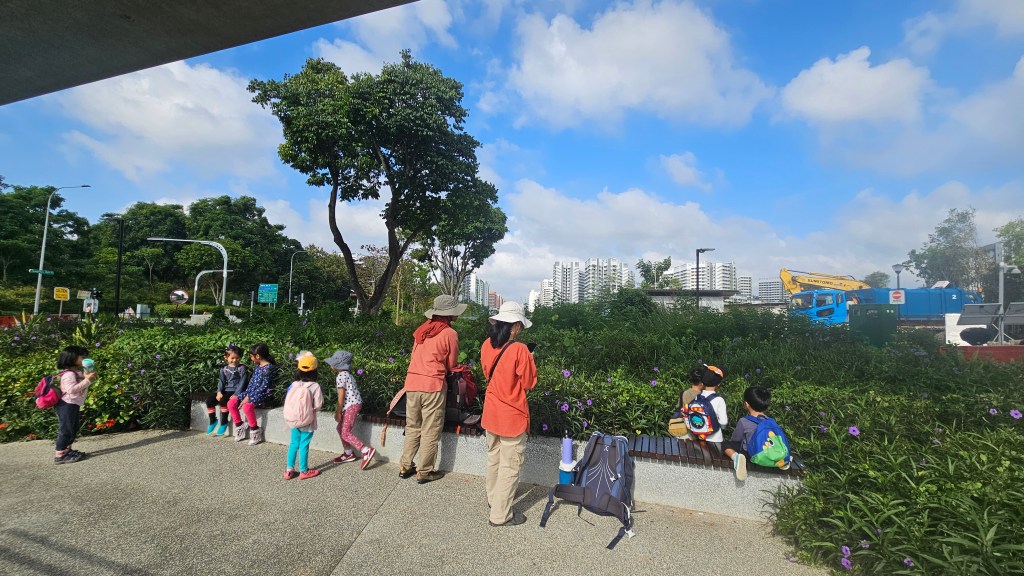
The sun beams down on the benches under the train track beside Tampines Eco Green. Standing in that warm light are Aminah and Sabrina, Forest School practitioners from Hundred Paths. A new Forest School session is beginning, and they are welcoming back the children from their Tuesday class.
After all the children gather, the plan is to set off for the Forest. But right at that very moment, a few of the kiddos find wonder in the little mini melons growing from a vine on the bushes by the bench. The kids start touching, smelling and go ruffling in the bushes. They are in deep learning through experience: they are in the zone. Aminah and Sabrina pause and step back to allow them to safely be in their zone. They hold space, allowing the kiddos to immerse themselves in their own self-directed experience of life’s magic.
(Reflection: It was beautiful for me to see this moment, because it reminded me of my own holding space practice. It is an art that is hard to come by in our fast-paced and result-focused world. They held it so well, it melted my heart.)
It is evident from their body language that the coaches are in sync. Aminah stands at a distance, close enough to hear the kids but not so close that her adult presence affects their rhythm. She is curious but also aware. Sabrina is also at a distance, but with eyes looking out for the little ones who are beside the core explorers. She is paying attention to their feelings and rhythm.
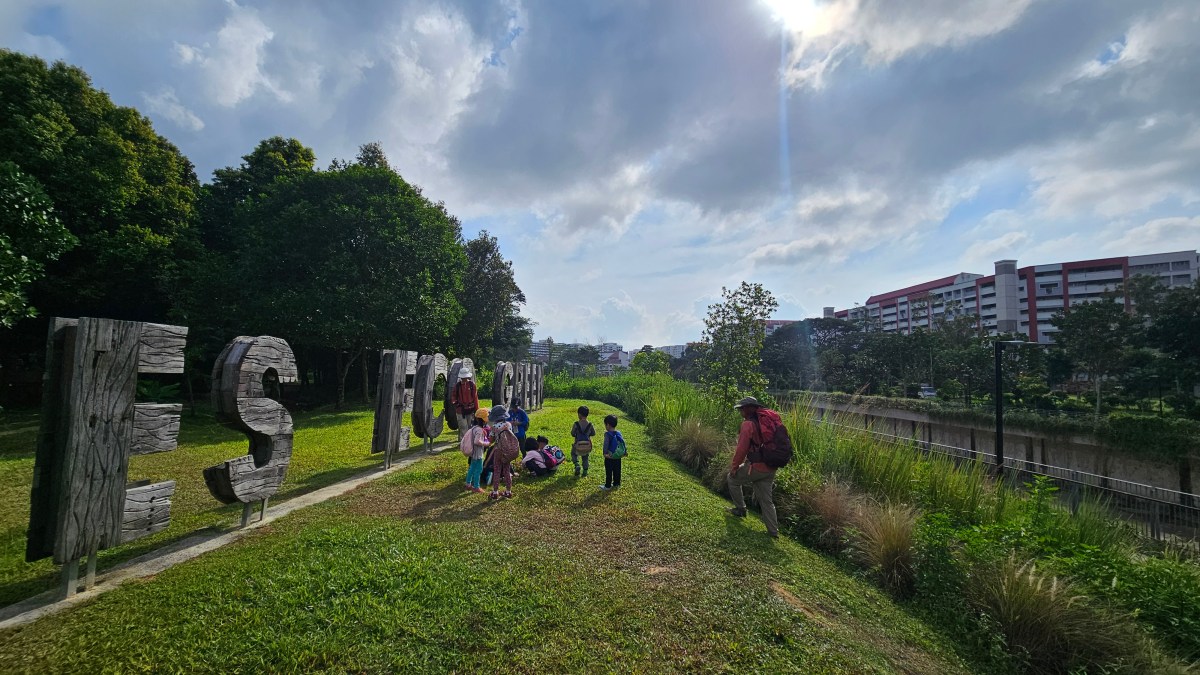
After about fifteen minutes, which feels like a long time when children are in the zone, the group starts moving off towards the forest. The children are confident and capable; they scale a two-table-high gradient slope with ease and confidence, placing their little feet intelligently on spots which are firm. Some take their time, while some dart up the slope. It all happens at their own pace. Sabrina and Aminah calmly follow them up, without showing worry physically or verbally. Throughout the ascent, there are no anxious exclamations of “be careful!” from the adults.
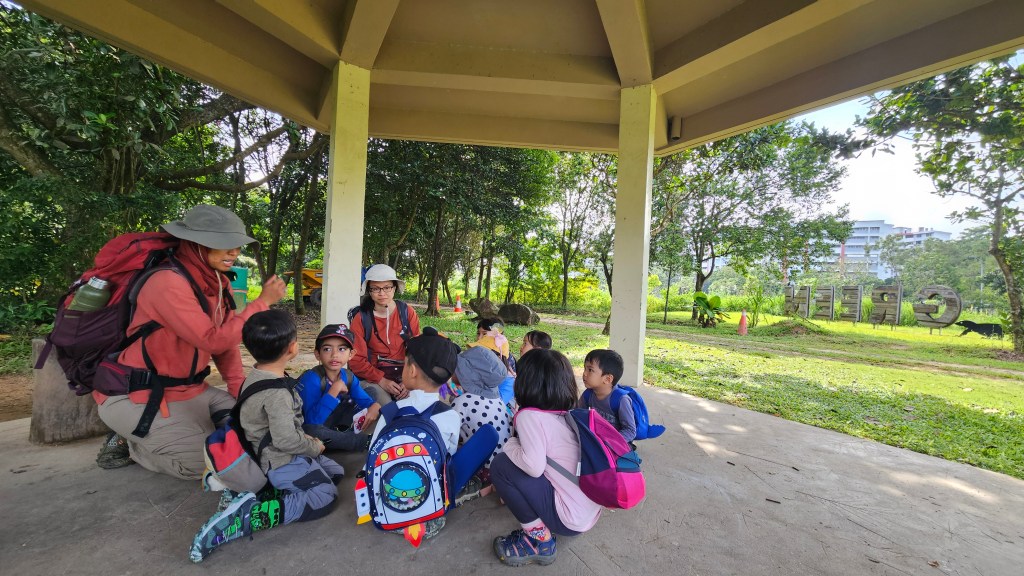
The Hundred Paths group gathers at a shelter by the entrance of Tampines Eco Green to do their opening circle time. They introduce a new girl for the day who is joining them ad-hoc. Most of the children quietly introduce themselves, with a few being a little more excited in their introduction. The coaches then brief them about safety, together with the involvement of the children. The kiddos complete the coaches’ sentences, answering excitedly at the facilitation of Sabrina. Finally, they deliberate upon where they will go for the day. There is a short discussion, where some of the children weave between the in-out of the discussion. Sabrina and Aminah ask a few questions to direct the children to the quieter ones, so that as much as possible, everybody’s opinions can be heard. Other than that, they don’t interfere, letting the children lead the conversation.
At the end of the discussion, the children decide to move into the woods towards the east side of the Forest. They walk along, at times together, at times in their own space, exploring the side of the trails, finding wonder in the little critters and greens. Sabrina and Aminah move in sync, weaving calmly amongst the group.
After a short walk, the children come by a small pond. All of them squat down by its side and look mindfully across the waterscape. Some of them start to dabble with the greens by the side. Some of them intently observe the terrapins swimming up towards them. A group of girls take out their notebooks, and start drawing and writing. Sabrina and Aminah, at this moment, take a step back once more, allowing for the children to lead the flow. They obviously know the land and space very well, being able to step back so confidently. They also know their children very well. A boy stumbles a little at the side of the pond, and one of his legs slips into the water as he drops to the grass patch on the side. Aminah is standing beside him at that moment, but her body language is entirely trusting and confident. She doesn’t flinch one single bit, knowing full well the capability of the child and the risk level of that moment.
(Reflection: It was gorgeous to see the zen-ness of that moment. I was in awe at their space-holding capacity. I must say, most adults would probably react with a sense of guilt and fear, in the same situation. They really exemplify space holding so well.)
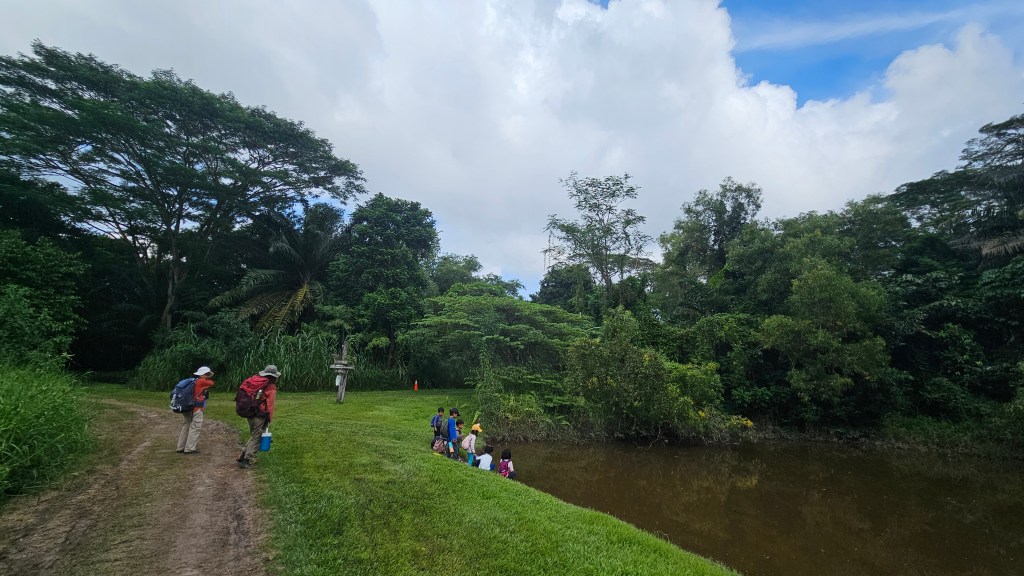
The group venture onwards on the trail, after thirty minutes by the pond. The earlier decision of going to the east part of the forest starts to waver. As some of the kiddos start to change their minds, the movement of the group begins to slow down. Amidst these flows, the kiddos are still pausing to take in the wonder of Nature and the moment, while the coaches stand aside and hold space.
After another ten minutes of a little argument leaving them at a standstill, the kiddos decide to settle where they were at draggin-ly. Aminah and Sabrina take out a mat and lay it on the ground. The group’s energy is a little dispersed at that moment due to the little standstill. Like a magic carpet, the mat draws the children together, to sit and gather upon it. The coaches take out a few cups, a big flask of Roselle drink, and a bottle of honey and lemon with a butter knife. Aminah lays it on the mat, and calmly starts to pour the drink into the cup, giving some to each child intently. Each child decides how much lemon and honey they want, adding these ingredients by themselves. One of the boys takes on the role of cutting the lemon independently, without the coaches hovering carefully behind him.
The children take out their snacks, and share them around openly. It is done without any prompting. Everyone had a little quiet moment of solidarity over food and drink; the communal practice of togetherness after tension was in action.
(Reflection: The moment of communal practice, using food and an item of centralising after tension, caught my heart and mind. It reminded me of all the time children use such methods to weave between issues and even apologise. These aren’t artificial, externally-imposed methods of “shake hands, say sorry and be friends”; they are organic, internal feelings of, “I reach out with a berry to gain back the trust of the relationship”. It reminded me to sometimes look towards sharing, food and a good centering item to create an environment for tensional energy to transform towards communality.)
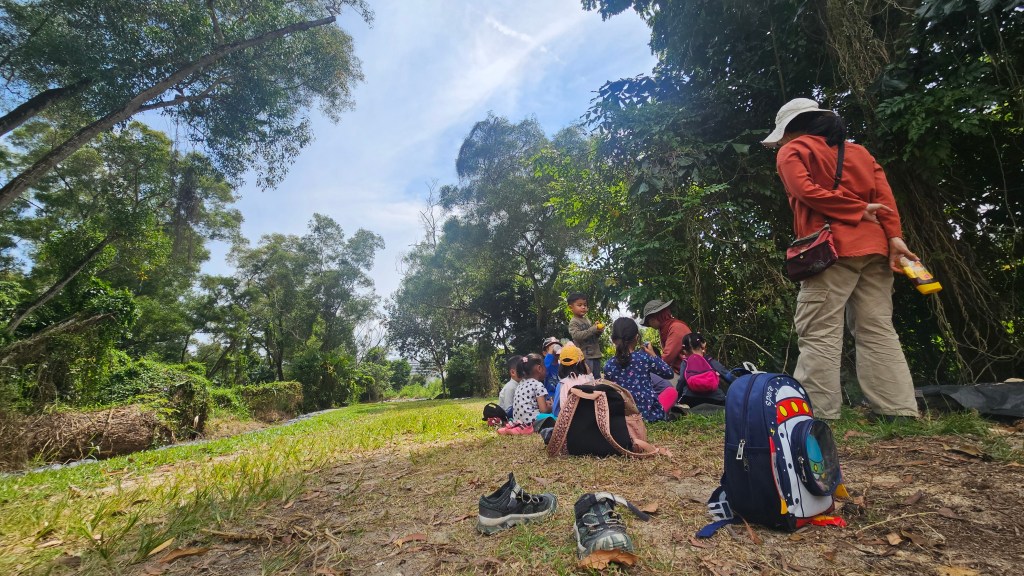
The whole session finishes with a little ending circle, followed by a slow walk back to the meeting point, where the parents will pick up their little ones.
Throughout the session, I got to check in with both Sabrina and Aminah about the songs of the birds, the geography of the space, and the communities of regular uncles and aunties that populate the space. Both practitioners showed a high level of understanding and connection to the land, through their knowledge of and relationship with all these elements. This was not just about doing a program: it was a deep relationship with the land and the cultures of the space.
Even though Sabrina and Aminah held space so beautifully, there were moments when the urban-Singaporeaness still rose and expressed itself. Aminah had little moments when her motherly instinct took over, and she reactively helped the children without pause. Sabrina had her moments when her Educator side came about to address the children’s tensions. They showed the human side of being a practitioner in those moments; it was honest and authentic. In our conversation after the session, they so authentically admitted to their inner impatience and conscious effort to hold space. I absolutely admire them for this, because their practice is not a performance, but a deep relationship with self and others. They are aware.
This research visit really taught me so much about our practice and our humanity. It showed me the brilliance of heart work. It showed me what I as a practitioner of seven years have forgotten in the journey of my own practice and ego. The Hundred Paths community really exemplifies the sincerity of the Forest School practice. I’m honoured to be given this golden opportunity to see Aminah, Sabrina, the children and the Hundred Paths community in expression.
ABOUT – Forest Pedagogy Research Project (FPRP)
FPRP is a research journey that I, Darren Quek, is embarking on to learn, re-learn and have a deeper understanding of the work, practice, challenges and guiding motivation of various practitioners of the Forest School and Nature pedagogy. I hope that through this project, I will be able to demystify the value and work of those who are practising in this field. The goal of the project is to create a Story Repository where others can connect and find inspiration from. Personally, I also see this as a pilgrimage journey for me to rediscover the magic of life through the experience of reaching-out, connecting, interviewing, journaling, writing and advocating for what I am passionate about.

