
In the four weeks of our circuit breaker period, most of us have to work from home (WFH), including our children who commence home-based learning (HBL) for the first time. Staying at home with your family for long hours every day can be really challenging. It’s one thing to do your own thing at home – it’s another to have to manage your child’s learning on top of that, and also not drive them or yourself crazy while being in close quarters all day long, for these few weeks.
As a yoga teacher for both adults and kids, and also a coach in Forest School style and pedagogy, here are some tips to help the whole family stay at home together. A forewarning: these tips would seem awfully time-consuming at first, especially when you just want to get on with it. But when we teach someone to fish on his own, then he would be able to feed himself for a lifetime. As we reset the ways we interact with children, it would change the dynamics in the family for the long term, with kids learning to be self-reliant, and adults learning to let go more.
5 tips to connect with kids:
1. Start the day right by co-planning together.
Good habits need a cue, a routine, and a reward. All driven by a craving. I read this from the book “The Power of Habit” and the examples given are awesome. We are creatures of habit, but it’s so tough to create that good work discipline or fitness regime. Why? Because we don’t instil the above elements of creating a good habit that’s sustainable in the long run.
So create a fixed study place, have a schedule for learning, and jointly decide on a reward to be enjoyed after learning hours. At the start of the day, both parent and child decide on it together, take co-responsibility, co-ownership of the day, and have something to look forward to. Yes, it is a joint discussion, not just an adult decision. Don’t go back on your word if a certain reward was promised. Explain if plans have to be changed and suggest alternatives. Basically, treat your child’s opinions with as much respect as you would for an adult – that’s how children develop independence and maturity. Kids need to believe that what they say matters.
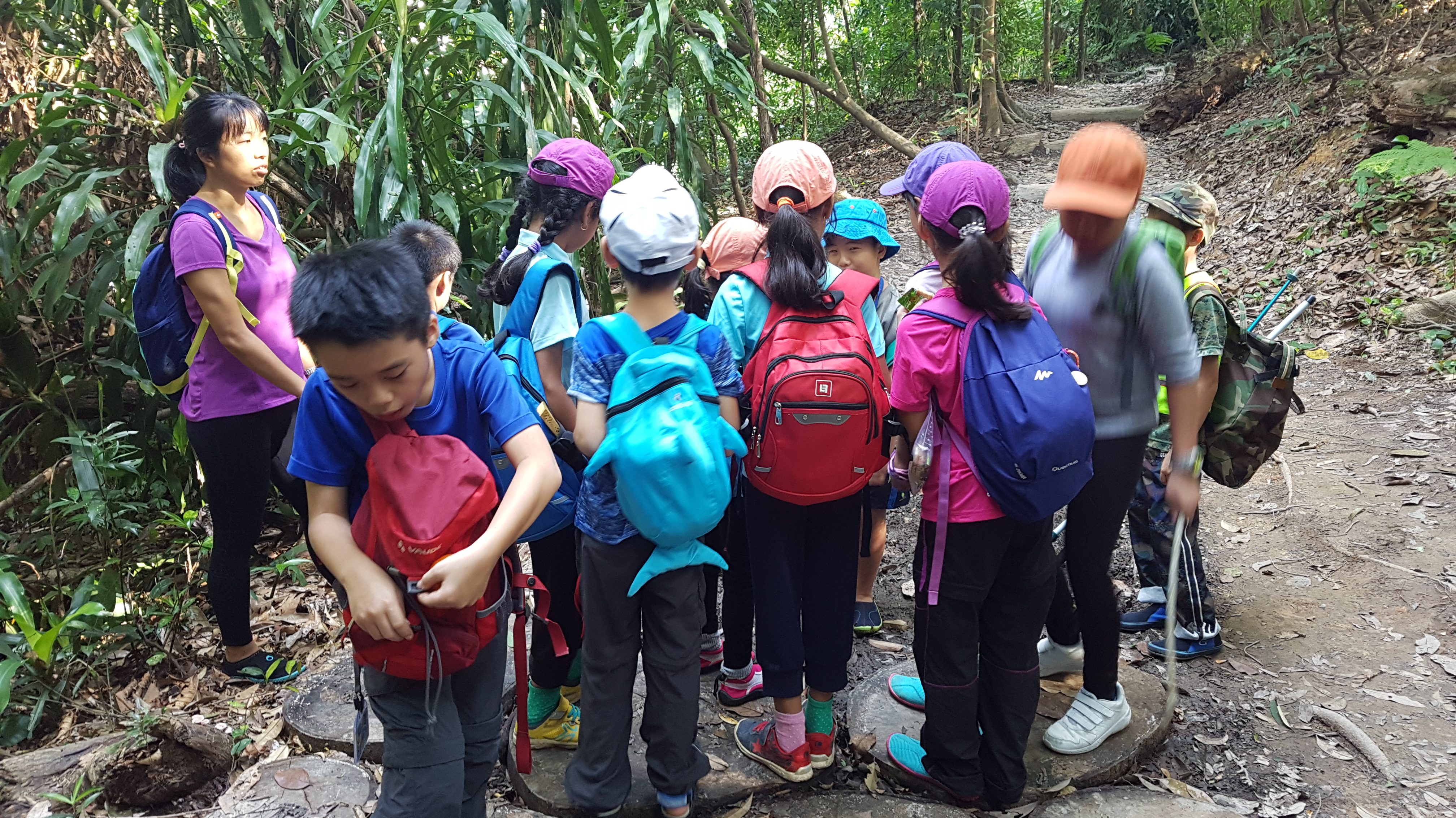
In Forest School, we start each session by asking the kids, “Where are we going today?”, and we only set off when every kid and coach in the session agree upon a location. Be it through compromise or promises or bribes even, the kids negotiate among themselves. There was once we stayed put for 45 minutes before the last objecting child finally gave in and stomped off. When there is consensus, kids are much more likely to stay accountable, but there would be natural consequences if they were unduly forced into it. Something to bear in mind.
The daily HBL schedule should be kept flexible enough so one need not follow it too rigidly. For example, if your kid is unable to complete his math questions, and you are tied down with a work meeting at that moment, credit him for his effort, and suggest to help him later on.
2. Kids need to move.
The human body is meant to move. Previous generations had it right as they did their own chores, taking care of themselves up till their last days. My elderly yoga students are possibly the most resilient of all my students. They are about 70 years old on average, are able to complete a full 1.5 hour class weekly, have no wrist pain even in plank pose, and continue doing their own chores while taking care of grandchildren. Conversely, I see many students in their 20s or 30s who easily suffer from back aches, wrist pain, weak knees, poor breathing, and many of them lead sedentary lifestyles slouched over their laptops.
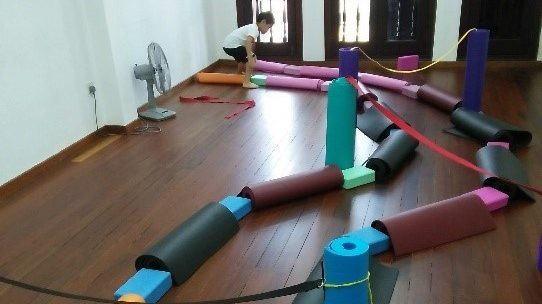
All the more so for children, who are full of energy and really need to move. If they tend towards hyperactivity, all the more they need to vent out that energy. The physical sensations soothe them, and help them to settle in better after that. For instance, I have a kid who did a few sessions of yoga therapy. He was excitable for the first 2 lessons, could hardly stop talking or moving, with tics like clicking his arms to the sides, blinking, obsessively organising the blocks and balls according to colour and in a straight line. Then we started to ‘build’ things like a table out of blocks or rolling a ball through different ‘tunnels’ (rolled-up yoga mats and props), he would calm down and focus very well in problem-solving and getting hands-on.
Hence, movement promotes mindfulness, which is the ability to focus in the present moment without judgment and with ease. So take a breather and stretch every hour or so. Yoga poses are fun for kids. Or any kind of fitness, like skipping or burpees or dancing etc – whichever kids choose to reenergise them – then they will look forward to the physical activity and easily settle back into learning after that. It all comes back to cultivating good habits by reinforcing suitable routines and rewards. Athletes are the epitome of excellence – their single-minded focus comes from intense mindfulness, reinforced through good habits.
3. Let the child lead the way during play and free time.
The Forest school way can be applied anywhere, even indoors. It is a child-led methodology, respecting the child’s opinions, ideas and self-responsibility. This can be very challenging for parents as they have instinctive authority. So parents need some boundaries. Some house rules are absolute (time to start HBL, washing hands before meals, etc.). Then let everything else be open. During free time, let kids play as they wish so long as they don’t affect others much. Let them colour out of lines, get themselves dirty with crayons or clay or even dirt. Let them play to develop their own independence, creativity, imagination, resilience to resolve boredom, arguments with others. If they refuse to pack up their toys or wash up, show them the consequences not by threatening them or confiscating their toys, but by saying ok then I won’t wash your clothes or plates after meals either. Match their rebellion with something similar to get them to feel the actual impact if it’s done back to them. As adults, we need to be creative too.
When disagreements happen between parent and child or siblings, well, let them argue! Let yourself be real too. Show your emotional response on your face so they can see how you are impacted, in terms of your feelings, but not lecturing them or threatening with punishments. Kids are affected most not by harsh words, but when they see your vulnerability. Don’t be afraid to show it, that’s how kids learn to be sensitive to others and recognise adults as having feelings as well. Children intuitively know what’s real, and what’s not.
4. Rope in the family and community.
Obviously, managing boundaries with children would not work if we as adults are not able to take turns to be there for the kids. So discuss with your other half /helper /other household members to plan how to make things work. Just as we co-plan the day with our children, we should also discuss shared responsibilities among the adults at home. As adults, we demonstrate how we support one another, and kids learn from us in turn.
Also, we are much more connected virtually these days than ever before. For the first time, we have access to just about everything you can think of. And the most amazing thing is that video-conferencing has suddenly become as commonplace as seeing your colleagues every day at work (before Jan 2020 that is). Take advantage of the plethora of activities provided online for the family and kids to enjoy. Have regular Zoom sessions with extended family members, other parents, friends to break the monotony of being at home all the time. I know of parents who host storytelling sessions, of kids from all over the world coming together to get to know different cultures, or simply grandparents who miss their grandkids so much.
If you need a break, reach out to anyone who can help to entertain your kids for a while. Don’t wait until you reach the limits of burn-out.
5. It’s OK to let go.
It’s OK to say that as adults, we are stressed or bored or overwhelmed too. It’s OK to say that mummy or daddy needs this block of time to do work, and feel tired even just past mid-day. It’s OK that we don’t have all the answers.
We don’t need to keep strictly to one daily structure. It will change as we get the hang of it. We cannot possibly achieve the same goals and deadlines as we did while in the office or at school. We all forget this at times. We need space and uncertainty in order to reflect and grow. It’s a form of resilience. That’s how we think out of the box, and develop mental strength to sustain us through these uncertain times.
So let go. Let kids take co-ownership of what they want to do with their time. And build this co-ownership right now while we are at home together. Adult or child, we are all newbies at figuring out how to make it work. And it’s certainly very OK to let go and do nothing if we are really exhausted after juggling everything over the last couple of weeks. There’s nothing wrong with watching Netflix together at the end of the day.
5 suggested activities:
(in addition to the multitude of activity ideas and educational sites already out there!)
1. Yoga and mindfulness
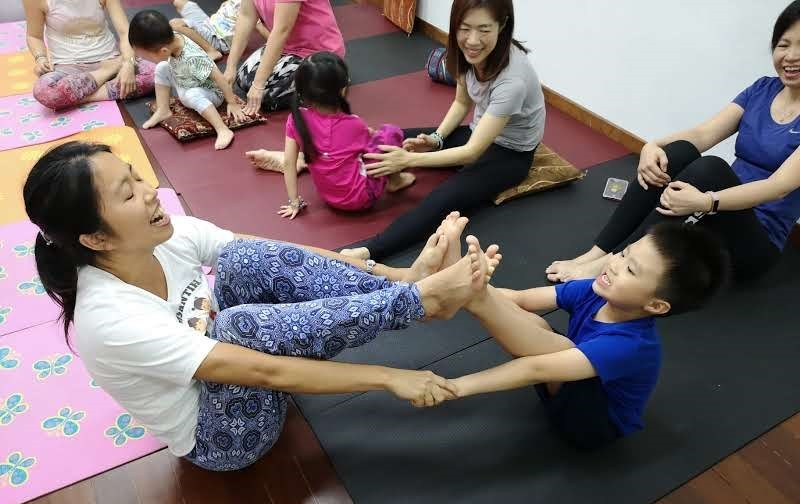
Tree and balancing poses – helps ground oneself and hone focus.
Butterfly and animal poses – to build fun stories.
Or make up your own poses, the idea is simply to lighten up and move around a bit.
Partner poses are fun! Great for bonding and horsing around.
There are different mindfulness techniques available – listening (songs, ukulele, surroundings), eating (eat without doing anything else), seeing (‘I spy with my little eye something blue..”, test each other on objects in the room with eyes closed), love and compassion (giving someone or your pet a hug or a virtual hug if they stay elsewhere). And of course the standard way of taking a few deep breaths to rebalance oneself and be at ease.
2. Zentangle or free drawing to Let Go
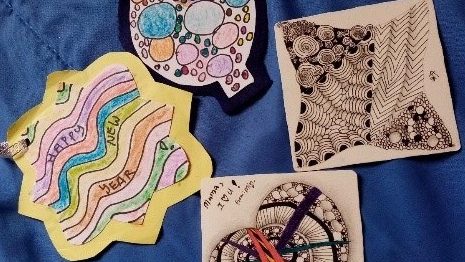
Zentangle is about drawing easy patterns, going freehand with a pen, no need to erase or be exact. We can ‘go with the flow’ with repetitive patterns, almost without thinking, and then taking a step back to see the entire piece as a whole. Any ‘mistakes’ are no longer visible, and you take it as it is. Anyone can draw Zentangle patterns, so long as you can use a pen. Everyone can be an artist.
Doing it together with kids will let adults realise how difficult it can be to let go of expectations and just draw for the journey rather than an end result. The circles need not be perfectly round. We need not pre-plan what to draw or not. Just stay present with each stroke and continue drawing.
3. Craft work for Mindfulness

Make a Glitter bottle, which is like a snow globe. Kids love making their own bottles. And then shaking it to watch the glitter settle. Try recalling an angry or upset moment, then shake the bottle. You can vent out your emotions with the shaking movement. Then watch the glitter settle, helping the mind to slow down gradually, take some deep breaths at the end. Let kids do that when they start to act up and can’t control their emotions. If they can watch the glitter moving, their mind would be drawn back to the present moment, and the emotions will slowly ease off into the background. Give them their own time-out through this.
Playdoh moulding works too, fiddling with the dough or throwing it or mixing it. Origami is also surprisingly well liked by kids who just need to fiddle with something for that sensory stimulation. And the familiarity of folding is soothing. For instance, I know of boys who love folding origami. They naturally focus upon the folding in a mindful and relaxed manner, and feel proud and happy to present their origami and teach their peers too. The sensory stimulation and kinetic movements are exactly what kids need.
4. Life skills like cooking or gardening or cleaning to Be of Benefit
When I was in Girls Brigade in primary school, I remember being handed a “chores list” that I had to help my family with. Helping to fold clothes, wash the dishes, etc, enables children to ‘adult up’, and recognise that even kids can contribute to the family. Learning daily life skills also means that they would not take daily needs for granted, and better appreciate their family members in taking care of such chores. Children learn how to take care of themselves over time with such essential life skills.
5. Play games together for Ownership and Creativity
Take turns to choose or come up with games. It can be any game – it’s good to agree to rotate between screen and offline games.
Colour game – collect things of a particular colour and put together to compare and contrast.
Kids actually come up with the best games, so let them teach you!
Written by:
Coach Shimin
OhmShanti Yoga & Forest School Singapore

